
Net Zero Home Builder — Rhode Island
Net Zero Energy Homes in Rhode Island
A home that produces as much energy as it consumes. All-electric, integrated by design, built to perform.
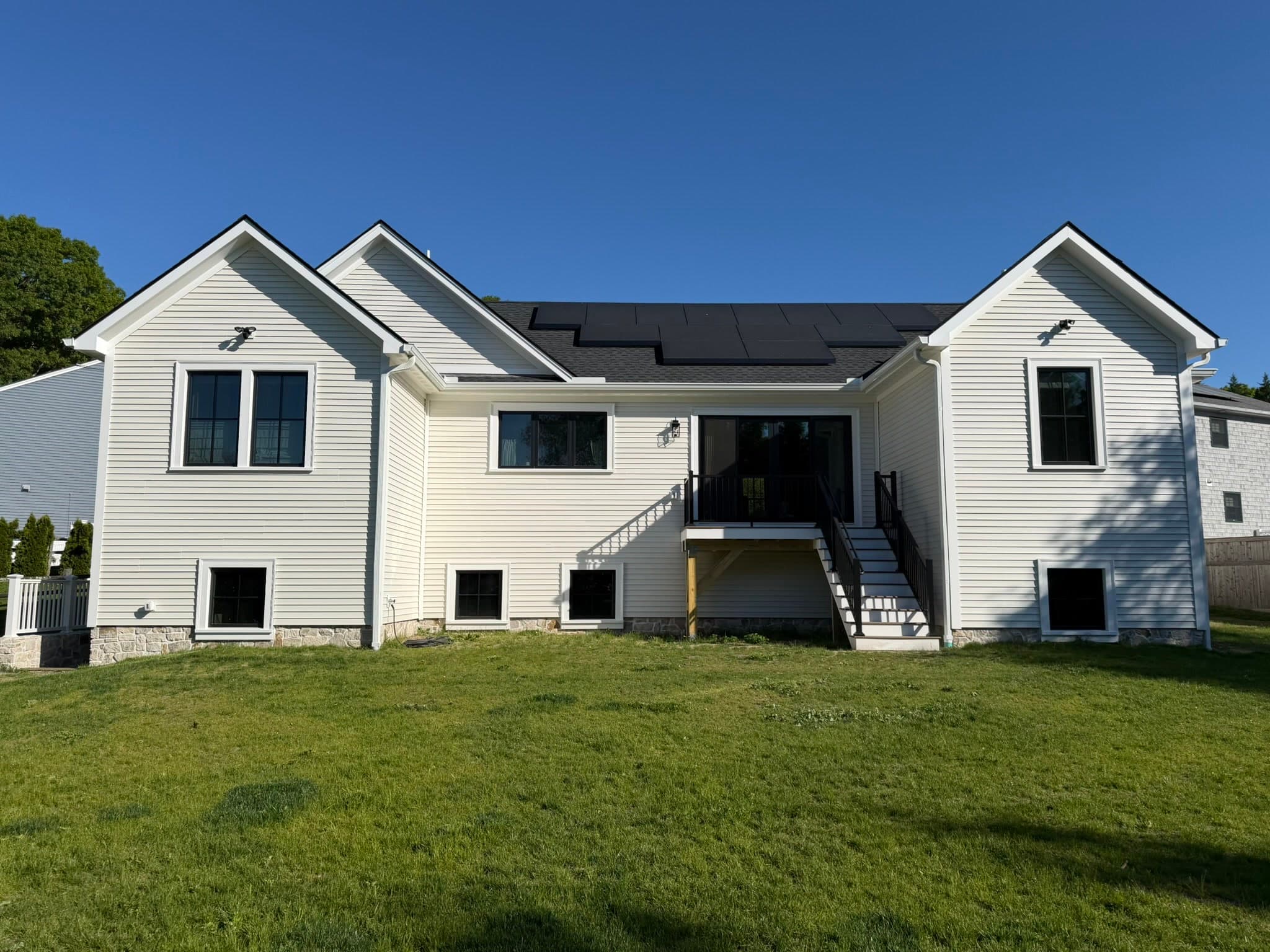
60 Rockland Drive — Rooftop PV Array
Certifications & Aligned Programs
DOE Efficient New Homes
NJ&J Builders is a DOE Efficient New Homes partner. We design and build to U.S. Department of Energy program standards with third-party verification of key performance metrics.
HERS-Tracked Performance
Every Net Zero project includes Manual J load calculations and HERS Index energy modeling so performance is measured, not assumed.
RIHousing ZEOS Aligned
Our approach aligns with the Zero Energy Ocean State Program and the Rhode Island energy code roadmap.
NJ&J Builders participates in the DOE Zero Energy Ready Home (ZERH) partner program. View our DOE partner listing.
NJ&J Builders is an ENERGY STAR partner. Learn more at energystar.gov.

NJ&J Builders is a WaterSense partner and installs WaterSense-labeled fixtures. Learn more at epa.gov/watersense.
What Is a Net Zero Home?
NJ&J Builders designs and builds net zero energy homes across Rhode Island. A Net Zero home produces as much energy as it consumes over the course of a year. It does this through a continuous thermal envelope with air tightness and elimination of thermal bridging, optimized mechanical systems, a PV array sized to actual loads, and battery backup — all designed as a single integrated system. The result is superior indoor air quality, long-term self-sustainability, and a home that performs on its own.
The key is optimization. The design of each component directly affects every other component downstream in the system. A better thermal envelope reduces heating and cooling loads, which means smaller mechanical equipment, which means less electricity demand, which means fewer solar panels and less battery capacity. But there is a point of diminishing returns — where additional investment in one component no longer produces a meaningful reduction elsewhere. Finding that equilibrium is what separates an engineered Net Zero home from one that simply has solar panels on the roof.
Net Zero is not a collection of products. It is a design methodology — an integrated approach where every decision is evaluated against the performance of the whole system. And the performance of the whole system affects the financial bottom line for the long term.
It Starts with the Site
Before a single wall is framed, the building site determines what is possible. The home's position on the lot — its orientation relative to the sun — directly affects how much energy the PV array can produce over the course of a year.
Roof orientation, pitch, and available area all factor into the solar design. So do obstructions — trees, neighboring structures, and seasonal shading patterns that reduce production during critical months.
This is one of the reasons Net Zero is most effectively achieved in new construction. When you are building from the ground up, the home can be positioned on the lot to maximize solar access. In an existing home, you work with whatever orientation and roof geometry you have.
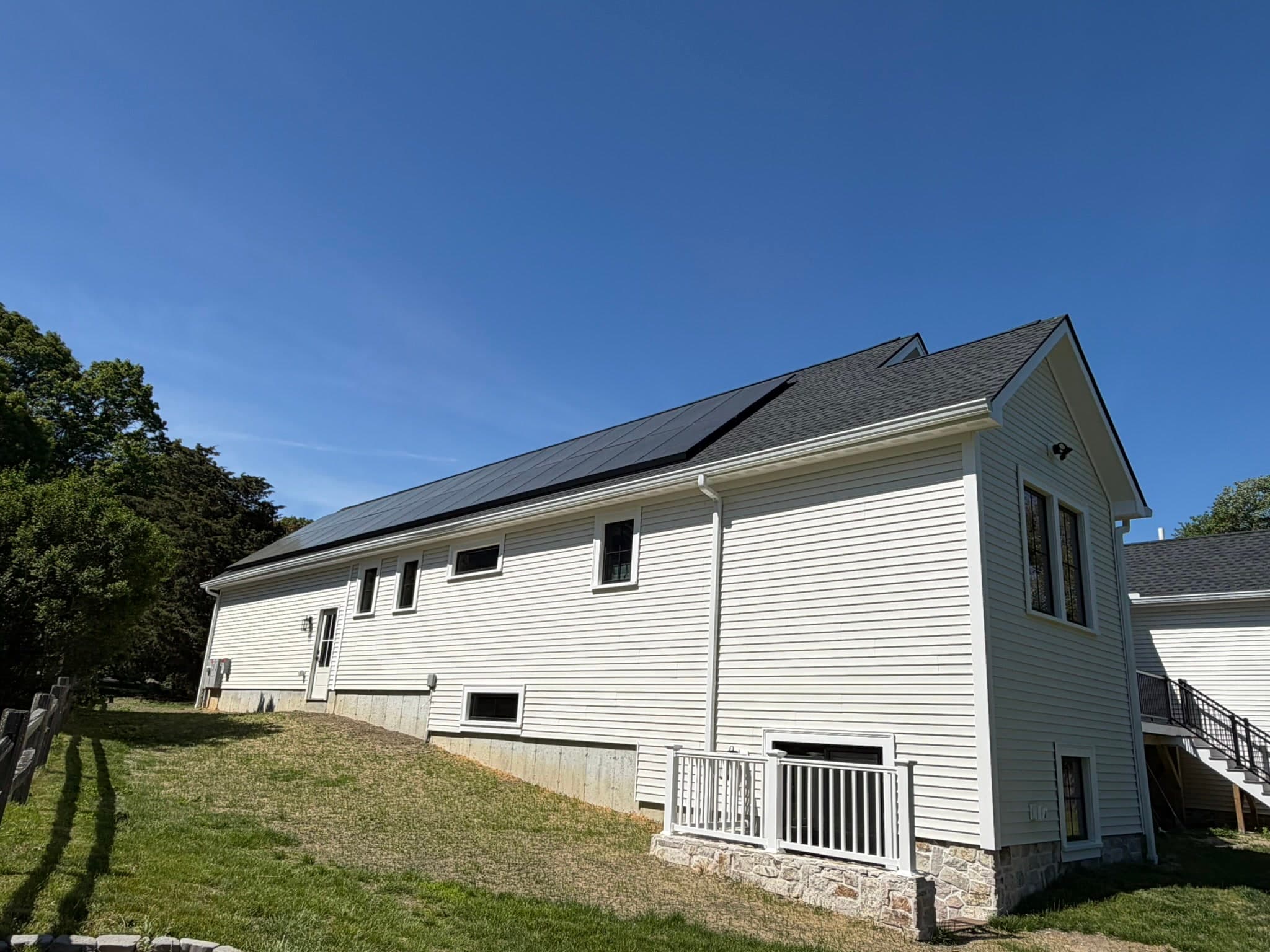
60 Rockland Drive — 20 kW rooftop PV array
The Building Envelope Drives Everything
The building envelope — walls, windows, insulation, and air sealing — is the most permanent and most important component of a Net Zero home. It determines how much energy the home needs in the first place.
A better envelope means lower heating and cooling loads. Lower loads mean smaller heat pumps. Smaller heat pumps mean less electricity demand. Less electricity demand means a smaller PV array. Every dollar invested in the envelope cascades through the entire system.
Windows are one of the most critical envelope components — and one of the most misunderstood. A standard dual-pane window has an R-value around R-3. High-performance triple-pane windows reach R-7 or higher — more than double the thermal resistance. They also dramatically reduce air infiltration at the frame and sash, which is where most window heat loss actually occurs.
The envelope lasts the life of the building. Foundation, framing, insulation, and air barrier are effectively permanent — a hundred years or more when properly constructed. Mechanical equipment gets replaced every fifteen to twenty years. Investing in the envelope is investing in performance that outlasts multiple generations of mechanical systems.
All-Electric Mechanical Systems — Properly Sized
A Net Zero home runs entirely on electricity. No gas lines, no oil tanks, no propane. Every mechanical system is all-electric — and every system must be properly sized to the building envelope using Manual J load calculations and energy modeling.
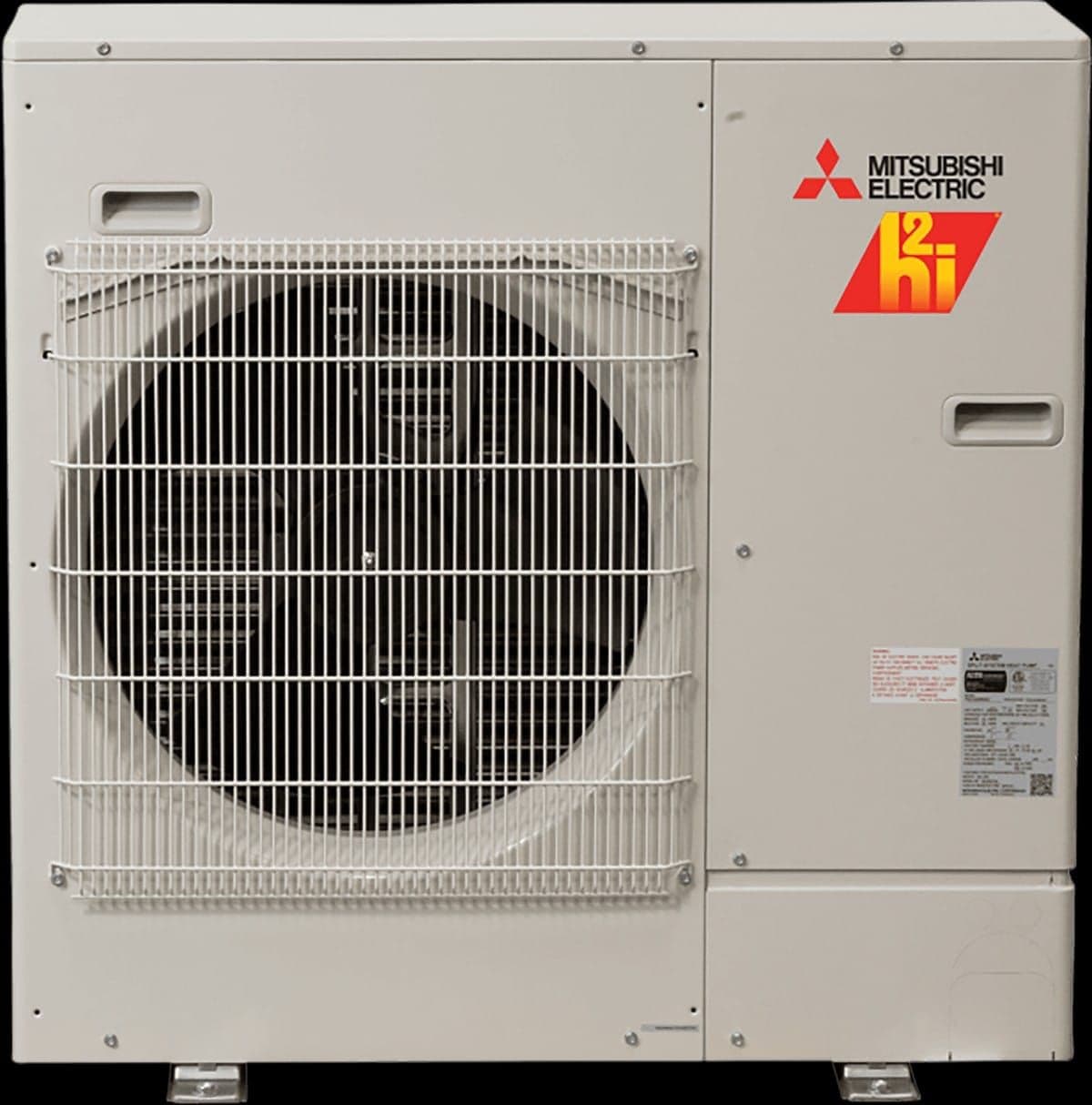
Air Source Heat Pumps
Cold-climate heat pumps provide all heating and cooling. No furnace, no boiler, no separate air conditioner. One system, properly sized to the actual loads calculated by Manual J.
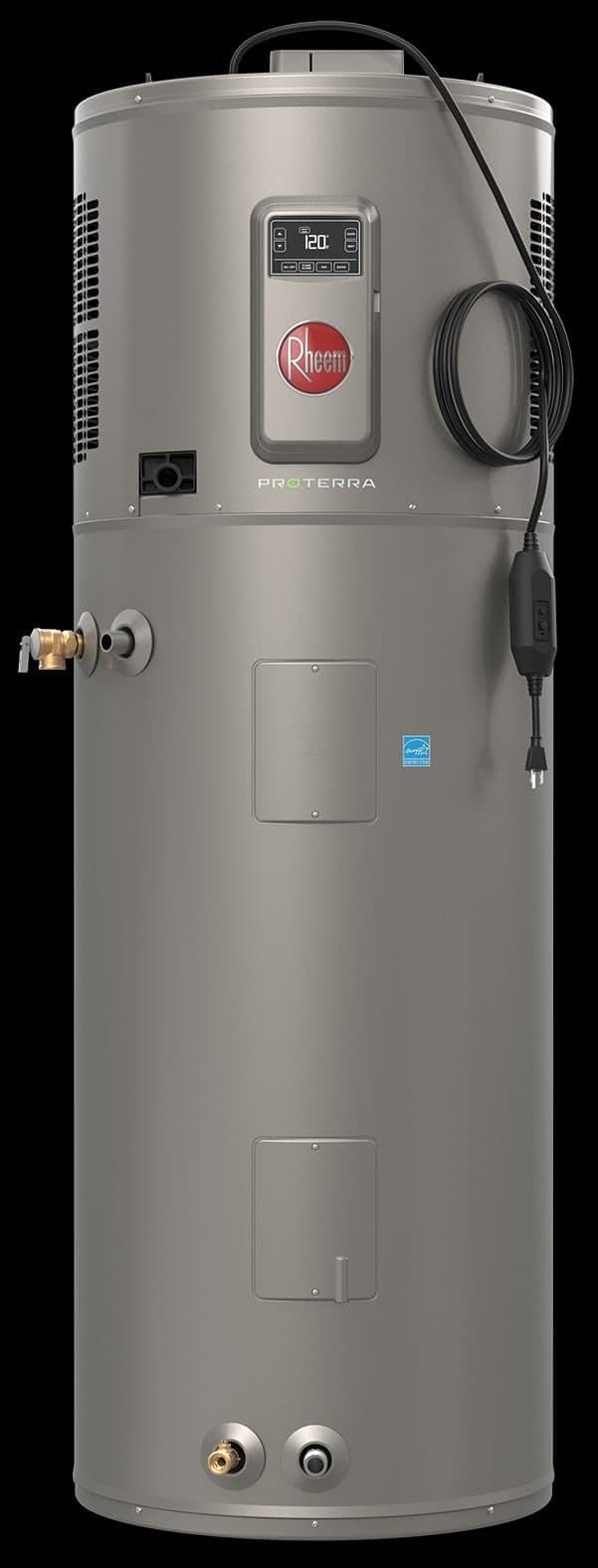
Heat Pump Water Heaters
Heat pump water heaters replace conventional gas or electric resistance tanks. They use the same heat pump technology to heat water at a fraction of the energy cost — all-electric from top to bottom.
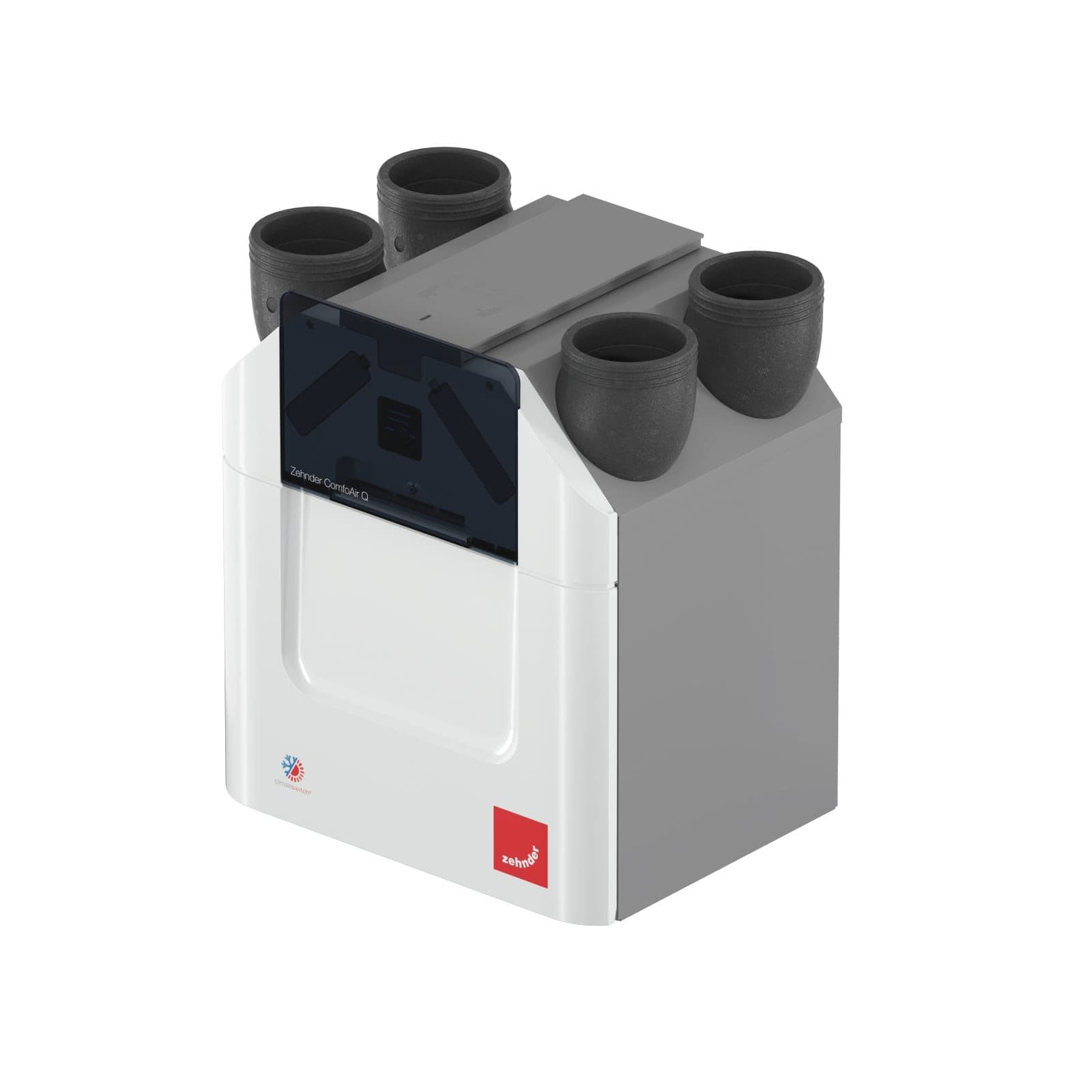
Zehnder Energy Recovery Ventilator
A tight envelope needs dedicated ventilation. The Zehnder ERV delivers filtered fresh air to every room and extracts stale air from kitchens and bathrooms — recovering up to 90% of the energy in the process.
Kitchen Exhaust & Make-Up Air
In a tight envelope, kitchen exhaust creates negative pressure. A dedicated make-up air system balances the pressure — preventing backdrafting, maintaining indoor air quality, and keeping the ventilation system performing as designed.
Manual J and Energy Modeling
Manual J is an engineering calculation that determines the actual heating and cooling loads based on the specific building envelope — insulation values, window performance, air sealing, orientation, and local climate data. It is the foundation for properly sizing every mechanical system in the home.
Without Manual J, equipment is sized by rule of thumb — based on what worked on similar projects the contractor has completed. In a standard code-compliant home, that approach may produce acceptable results. In a Net Zero home, where the envelope performs at a significantly higher level, the actual loads are much lower than a conventional build. Rule of thumb sizing consistently oversizes the equipment. An oversized heat pump short-cycles, wastes energy, fails to dehumidify properly, and costs more than it should. Energy modeling ties the entire system together, verifying that the envelope, mechanicals, and PV array will perform as designed before construction begins.
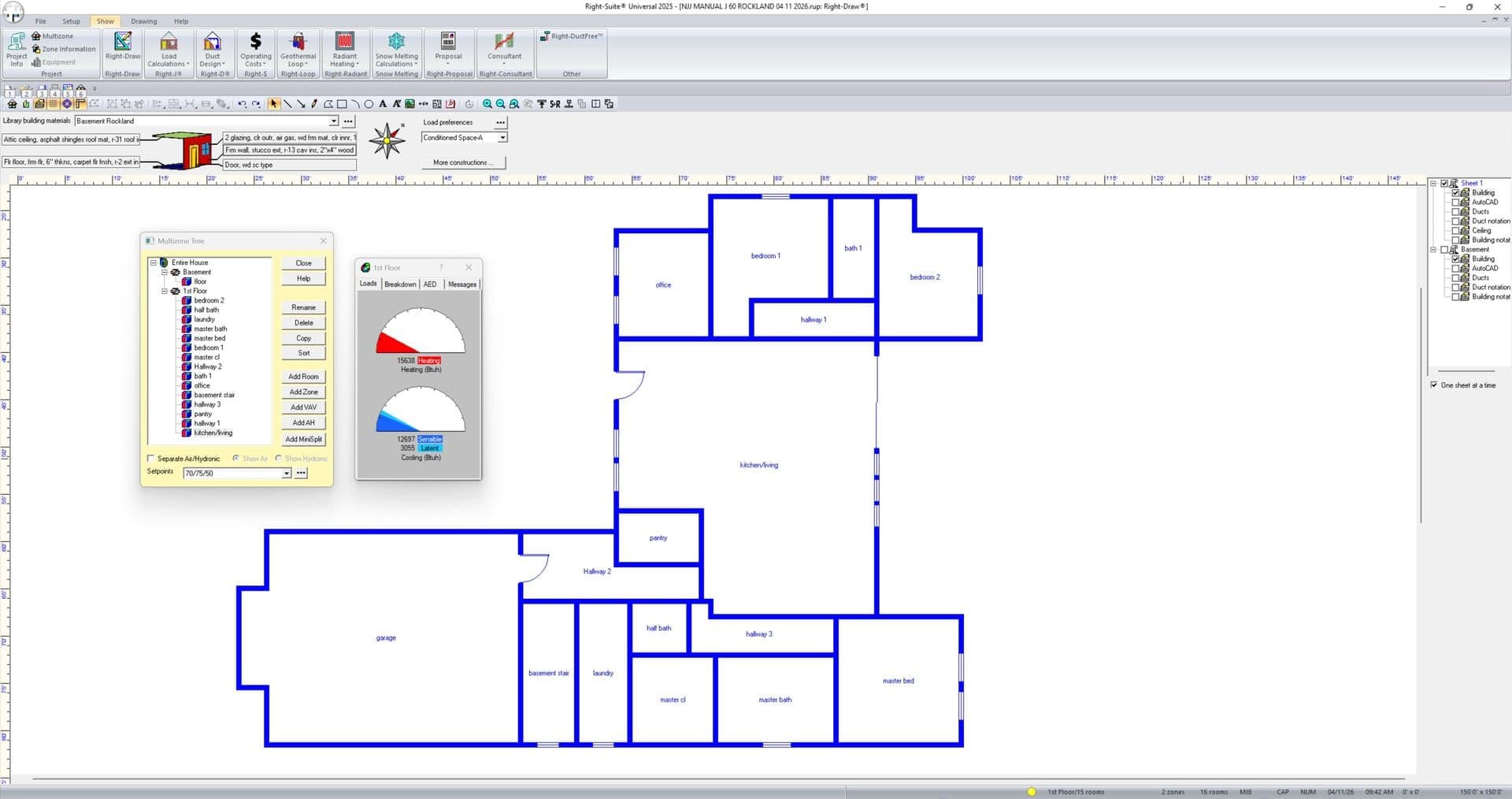
Room-by-room load calculation
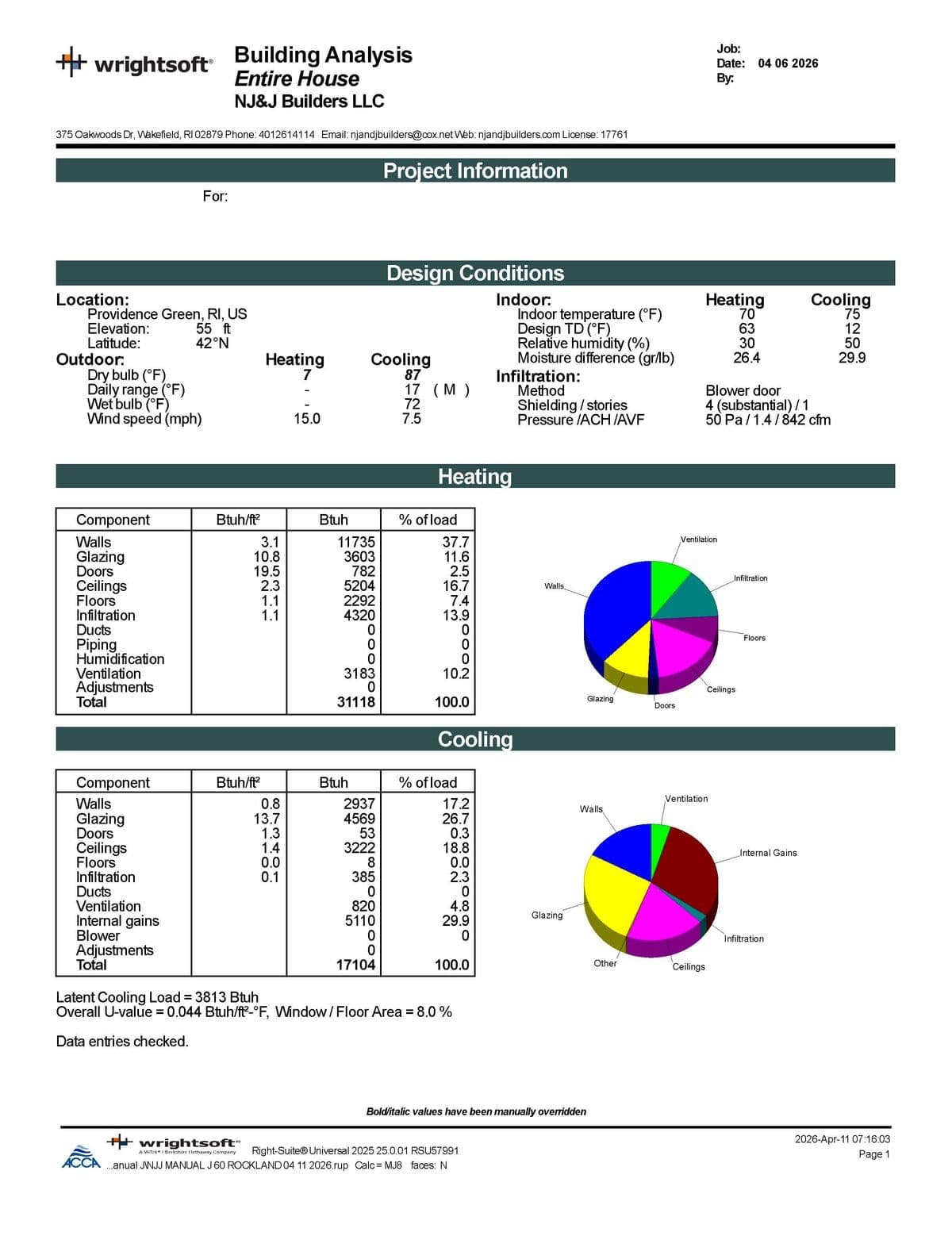
Building Analysis output — heating and cooling loads
Solar + Battery — Sized to Actual Loads
Every component in the energy system is sized from the energy model — the PV array, the battery, and the EV charger are all determined by the home's actual demand, not rules of thumb.
PV Array & Battery Storage
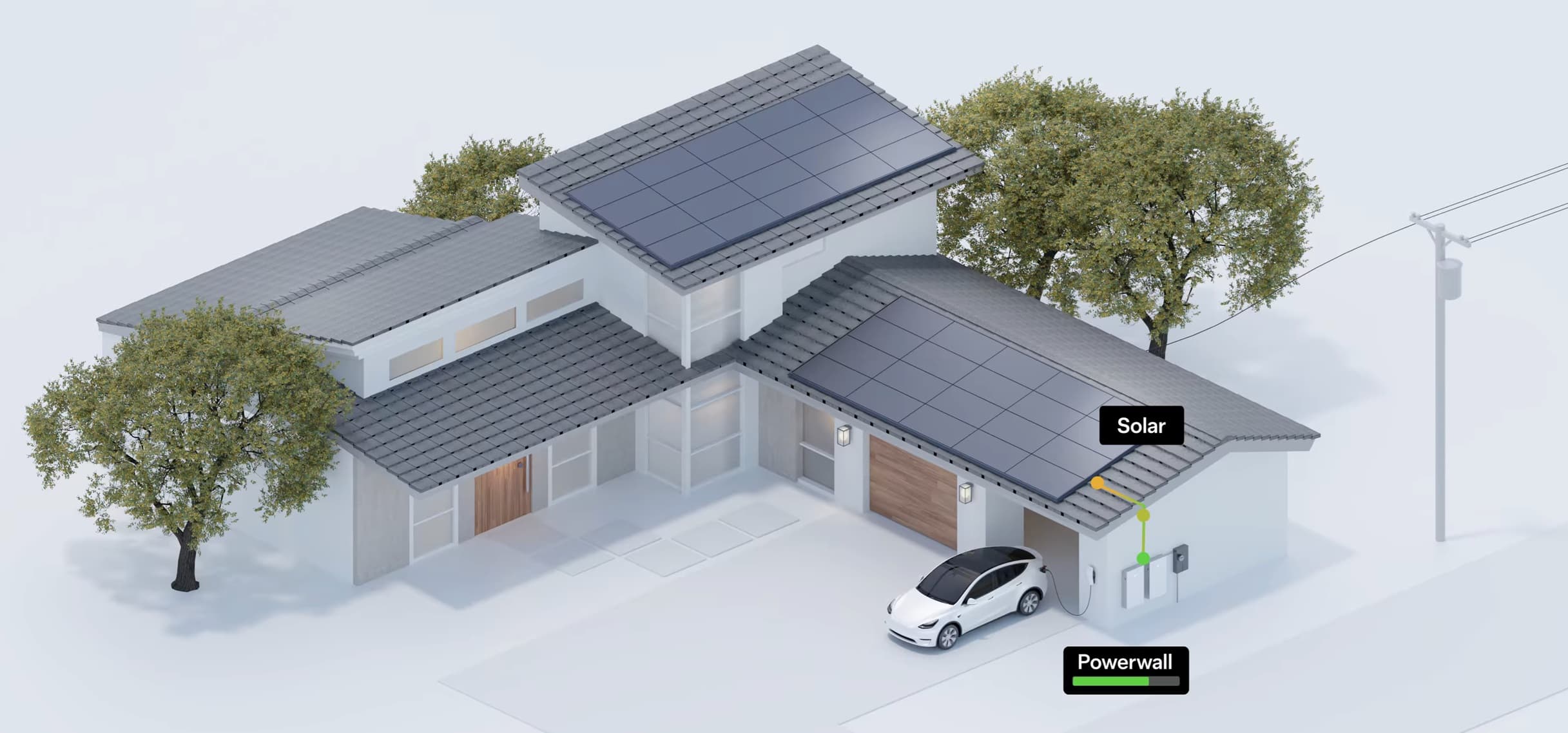
The rooftop PV array produces enough electricity to offset annual consumption, including the electric vehicle. Battery storage captures excess production during the day and powers the home overnight and during grid outages — replacing the need for a standby generator.
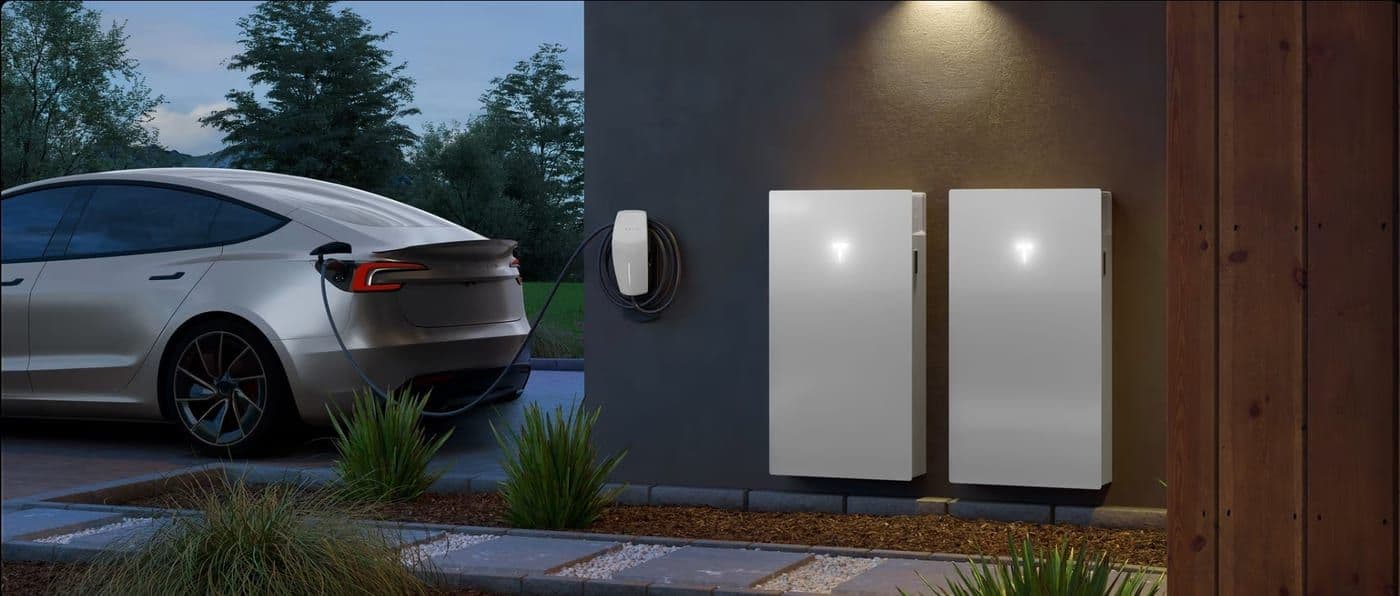
Powerwall & EV Charging
The Tesla Powerwall manages energy flow between the PV array, the home, and the grid. EV charging is integrated into the same system — the service panel, wiring, and dedicated circuit are all designed in from day one, not added as an afterthought.
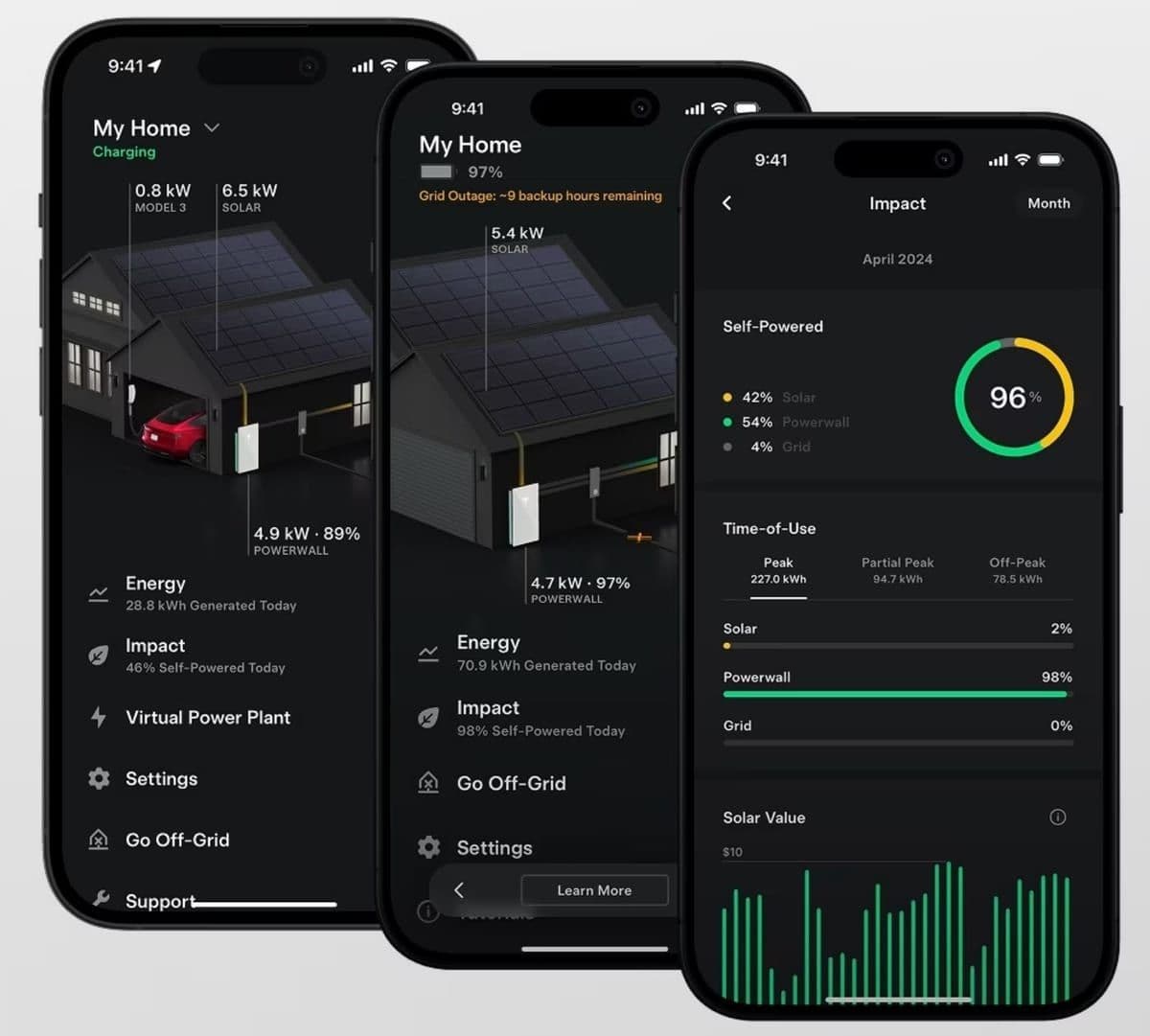
Real-Time Monitoring
The Tesla app provides real-time visibility into solar production, battery state, home consumption, and grid usage — at any time, from anywhere. You always know exactly where your energy is coming from and where it is going.
The Optimization Challenge
In a Net Zero home, every component affects every other component. Improve the building envelope and the heating loads drop — which means a smaller heat pump, less electricity demand, and a smaller PV array. The savings cascade through the entire system.
But there are diminishing returns. At some point, the cost of additional insulation exceeds the savings from a smaller heat pump and fewer solar panels. Finding that balance — where each dollar invested produces the most benefit across the whole system — is the optimization challenge.
This is why Net Zero requires integrated analysis, not separate vendors with separate assumptions. The architect, HVAC contractor, and solar installer each optimizing their own piece independently will not produce the same result as one team optimizing the entire system together.
Beyond Code Compliance
Building codes offer two compliance paths — the prescriptive code and the UA tradeoff. Both establish a minimum standard. A Net Zero home exceeds the requirements of both paths.
Meeting code and achieving Net Zero are fundamentally different goals. Code asks whether the home passes. Net Zero asks how the entire system performs together — envelope, mechanicals, solar, and storage — as an integrated whole.
The Honest Challenges
Net Zero construction is more complex than conventional building. That complexity is real, and it is worth understanding.
Higher Upfront Investment
A Net Zero home costs more to build than a conventional home. The building envelope, mechanical systems, PV array, and battery storage all add to the upfront investment. The long-term savings are real, but they require a higher initial commitment.
Codes and Standards Are Evolving
Energy codes are changing rapidly. Rhode Island adopted the 2024 IECC in full — the most current energy code — while many states are still operating under 2015 or 2018 standards. Everyone in the industry needs to keep up with how building requirements are evolving.
New Construction Is the Ideal Path
Net Zero is most effectively achieved when you can control every variable from the start — site orientation, envelope design, mechanical sizing, solar placement. Retrofitting an existing home to Net Zero is possible but significantly more constrained.
Optimization Is the Solution
At NJ&J, we integrate design, construction, and energy modeling under one roof. That means every decision — envelope, mechanicals, solar, battery — is evaluated against the performance of the whole system. We iterate through the design until we reach the optimum — the point where additional investment in any one component no longer produces a meaningful return. The result isn't just a house with solar panels — it's an integrated power plant that you happen to live in.
Incentives Available in Rhode Island
Rhode Island offers several programs that support high-performance new construction. These are publicly available incentives — not part of any builder's proprietary offering.
Rhode Island Energy & CLEAResult
The Residential New Construction program offers whole-house performance incentives up to $4,000 for qualifying new homes that meet energy performance targets. Must enroll before construction begins.
Clean Heat RI
Incentives for air source heat pumps — up to 60% of system and installation cost. Separate incentive of $2,500 for heat pump water heaters. Must meet ENERGY STAR cold climate specifications.
ConnectedSolutions
Battery storage owners can participate in Rhode Island's Virtual Power Plant program — supporting the grid during peak demand in exchange for annual payments. Rates are locked for five years.
REG Solar Incentive
The Renewable Energy Growth program provides a fixed production incentive for solar — a guaranteed rate per kilowatt-hour for fifteen to twenty years, providing long-term certainty on solar economics.
Our Approach as a Net Zero Home Builder in South County, RI
We perform the full optimization in-house — site analysis, building envelope, mechanical sizing, PV array, and battery storage designed together as one integrated system. One team, one analysis, one set of assumptions from design through construction.
NJ&J Builders is a DOE Efficient New Homes partner — the U.S. Department of Energy's program for high-performance residential construction. We are among Rhode Island net zero home builders who design and build to DOE program standards with third-party verification of key performance metrics.
Design-Build
The same team that designs the energy systems also builds the home. No disconnect between design and construction.
Integrated Analysis
Every component is optimized together. A change to the building envelope cascades through equipment sizing, solar, battery, and overall system performance.
Coastal Expertise
Building Net Zero on the Rhode Island coast adds complexity — salt air, high winds, flood zones, CRMC permitting. We handle it as part of the same process.
60 Rockland Drive Net Zero Build
A custom, all-electric, net zero energy home in Wakefield — a 20 kW rooftop solar array (46 Qcells panels) with two Tesla Powerwall 3 batteries, a continuous thermal envelope tested at 1.37 ACH50 (DOE Zero Energy Ready Home limit 3.0), a single cold-climate heat pump, and continuous ERV fresh-air ventilation. It generates more energy than the home and its two EVs use, earning a Confirmed HERS Index of −5 (independently rated by CLEAResult, RESNET Registry 623125870). Built on the DOE Zero Energy Ready Home pathway — complete, occupied, and third-party verified to DOE program performance requirements.
Building on the Rhode Island coast? See our coastal construction approach for FEMA flood zones and CRMC permitting, or browse our full portfolio of custom homes across southern Rhode Island.
Where We Build Net Zero Homes in Rhode Island
NJ&J Builders designs and builds net zero and DOE Zero Energy Ready homes across South County and the neighboring bay towns: South Kingstown — home of our Confirmed HERS −5 build in Wakefield — Narragansett, Charlestown, Westerly, North Kingstown, Jamestown, and Newport.
The system is the same in every town — an all-electric custom home designed from an energy model, with envelope, heat pumps, solar, and battery storage sized together to the point of diminishing returns. What changes is the lot: solar orientation, coastal wind and flood requirements, historic review in Newport, private well and septic in Charlestown or on Conanicut Island. Each service-area page covers what building in that town involves.
Start Your Project
Tell us about your site, timeline, and goals. We respond within one business day.