

Net-Zero Case Study
60 Rockland Drive: a net-zero home that generates and stores its own power
A self-sustaining, all-electric home in Wakefield, Rhode Island — even temperatures in every room, continuously filtered fresh air, and an independently verified HERS Index of −5: it makes and stores more energy than it uses.
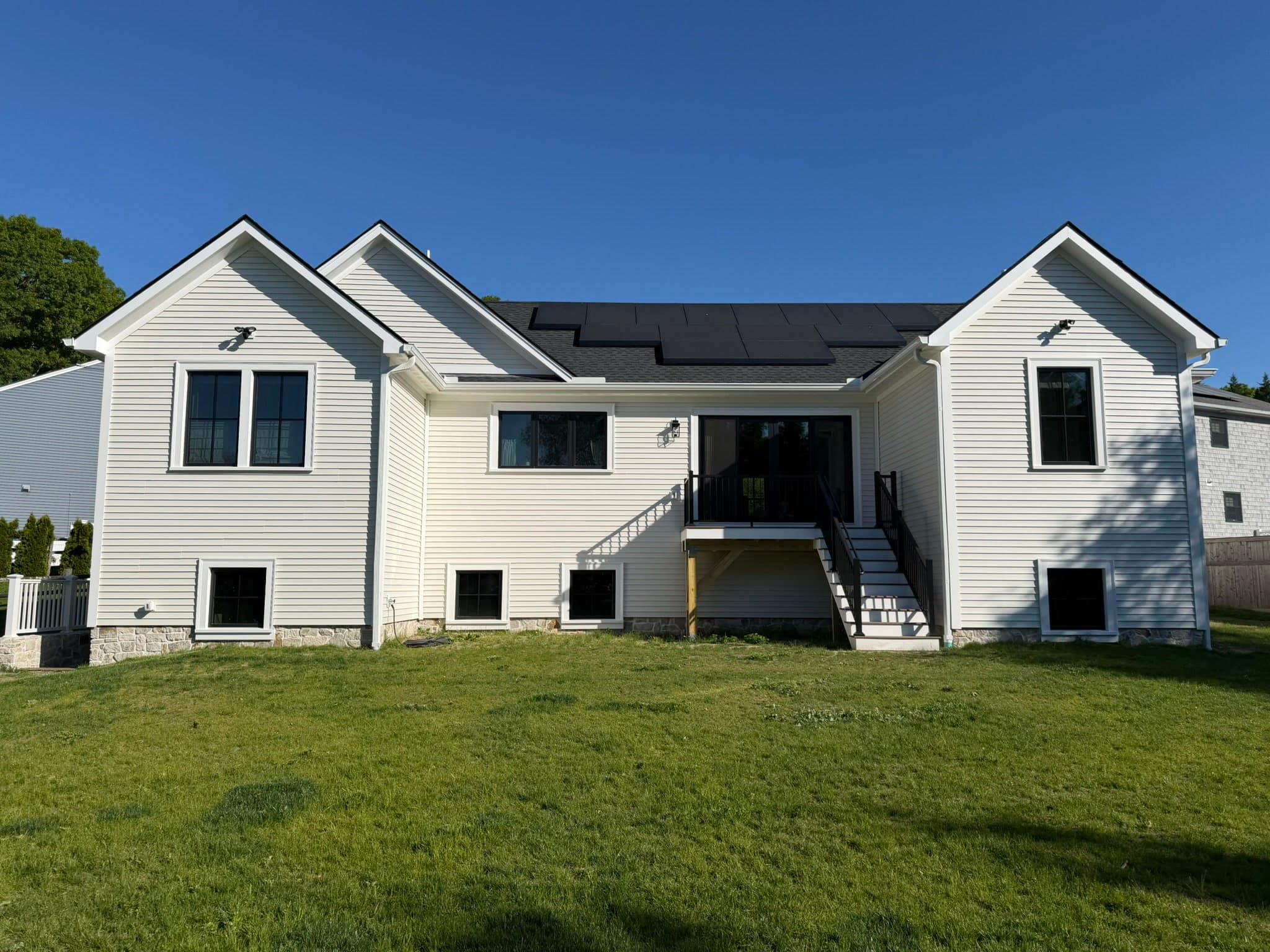
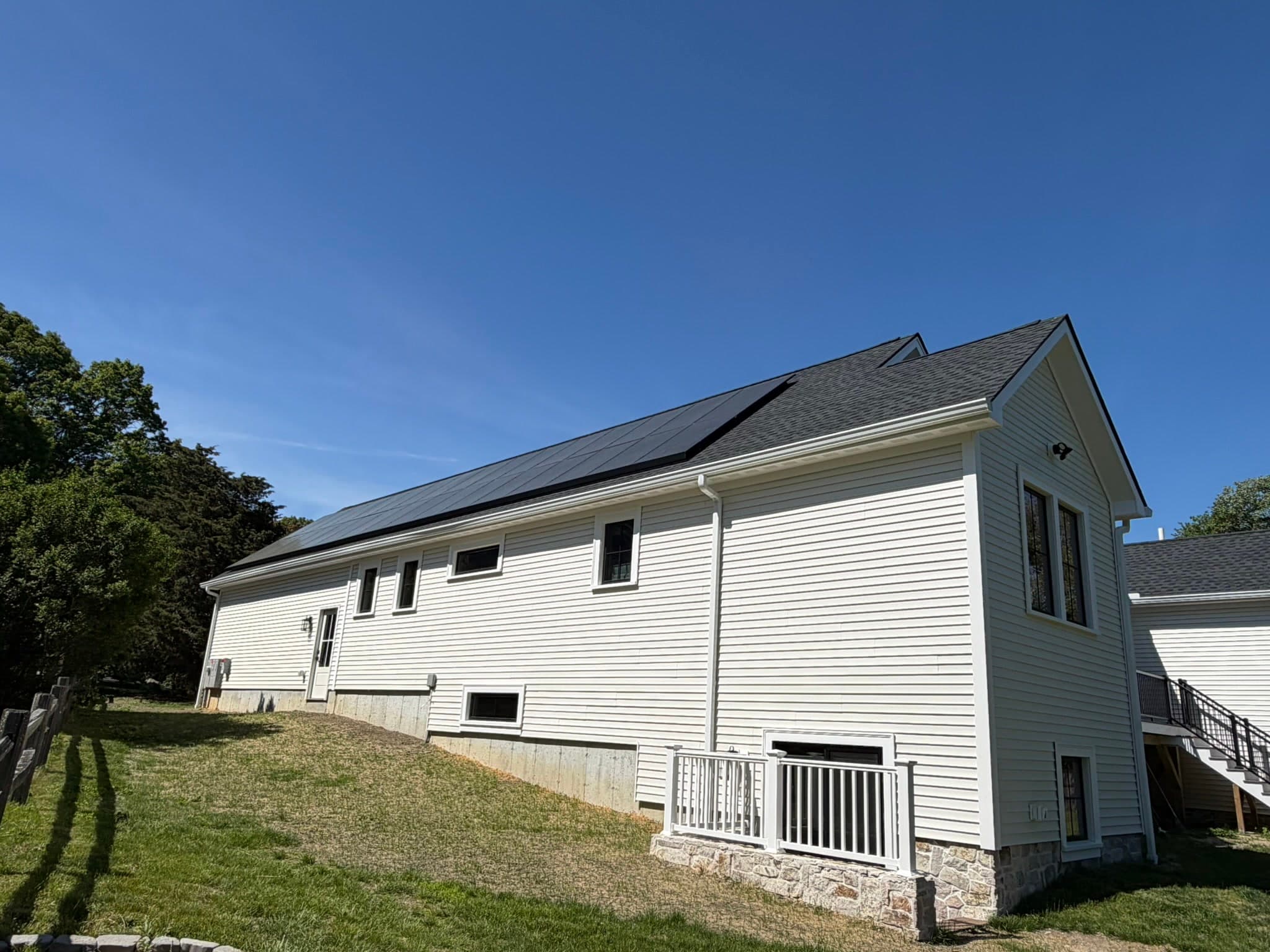
60 Rockland Drive is a custom, all-electric net-zero home in Wakefield, Rhode Island, built by NJ&J Builders. Its rooftop solar generates about 25,000 kWh a year — enough to power the all-electric home and charge the household's two electric vehicles — and two Tesla Powerwall 3 batteries store it on site. There is no gas, no oil, and no combustion anywhere in the house.
New to the concept? Read our guide to net zero homes in Rhode Island.
- All-electric — no gas, no oil, and no combustion anywhere in the home.
- Generates and stores its own power — a 20 kW rooftop solar array and two Tesla Powerwall 3 batteries.
- Airtight envelope — independently tested at less than half the air leakage the DOE program allows (1.37 ACH50 against a 3.0 limit).
- Independently verified — a Confirmed HERS Index of −5, rated by CLEAResult (RESNET Registry ID 623125870).
U.S. DOE Zero Energy Ready Home · ENERGY STAR · EPA Indoor airPLUS · WaterSense-labeled fixtures
What a Net Zero Home Delivers
Comfort — an even temperature in every room
The building envelope is airtight and heavily insulated, and the heat-pump system is sized to the home's measured heating and cooling loads — not oversized. Indoor temperatures stay consistent from room to room and floor to floor, in every season: the bedroom over the garage is the same temperature as the living room. The same airtight, insulated construction also keeps the house quiet.
Indoor air quality — filtered fresh air, continuously
A balanced ventilation system runs continuously: it supplies filtered outdoor air to the bedrooms and living areas and exhausts stale air from the bathrooms, kitchen, and utility rooms. With low-VOC paint, low-emission wood products, and MERV-8 filtration, the home meets the EPA Indoor airPLUS standard.
Low energy demand — before solar
The airtight envelope and right-sized heat pump keep the home's heating and cooling loads low, even on the coldest design night. Every major system is electric: the heat pump, a heat-pump water heater, an induction range, ENERGY STAR appliances, and 100% LED lighting. The home's annual energy demand is low before any solar is counted.
On-site power — generated and stored
The home makes its own electricity, stores it for nights and outages, and charges the household's two electric vehicles — with a surplus over the year at typical use. When the grid goes down, the home runs on its stored energy and recharges from the sun the next day. The full system specifications are in the system-by-system section below.
The story of this home
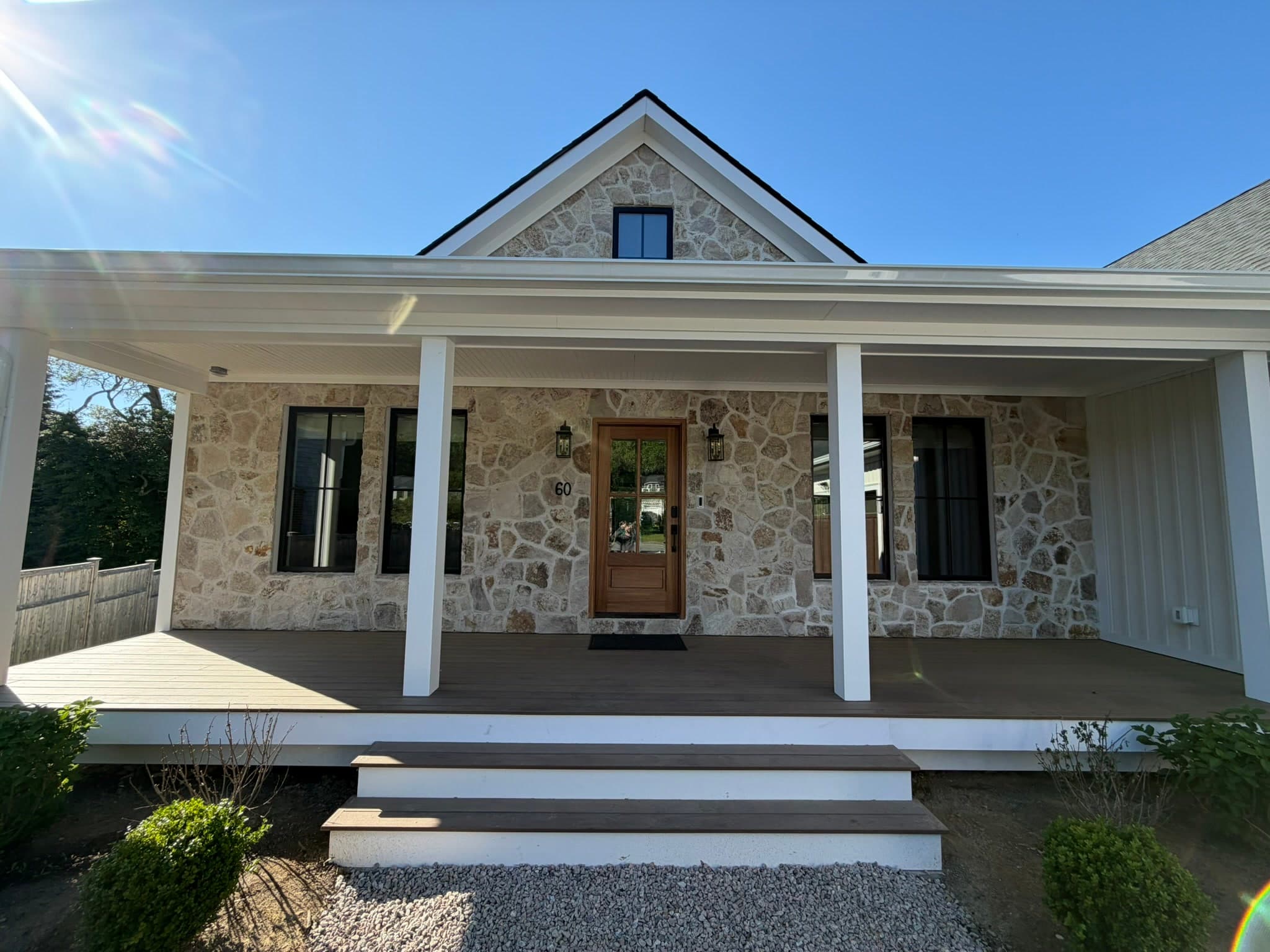
60 Rockland Drive is a custom four-bedroom home in Wakefield, Rhode Island: a single above-grade story over a full walkout basement, 4,218 square feet of conditioned space inside the sealed envelope. It was designed and built to a net-zero target — all-electric, with no fossil fuels on site, producing and storing about as much energy as it uses.
The design followed from that target: an airtight, heavily insulated envelope to hold the loads low, a single heat pump sized to those loads rather than oversized, continuous balanced fresh-air ventilation, and rooftop solar with battery storage — each detailed system by system below.
The home was permitted in August 2024. South County Design Group provided the structural design, energy modeling, and equipment selection; NJ&J Builders was the general contractor for construction. Kenneth Hayes, a licensed Rhode Island general contractor (#17761), is principal of both firms.
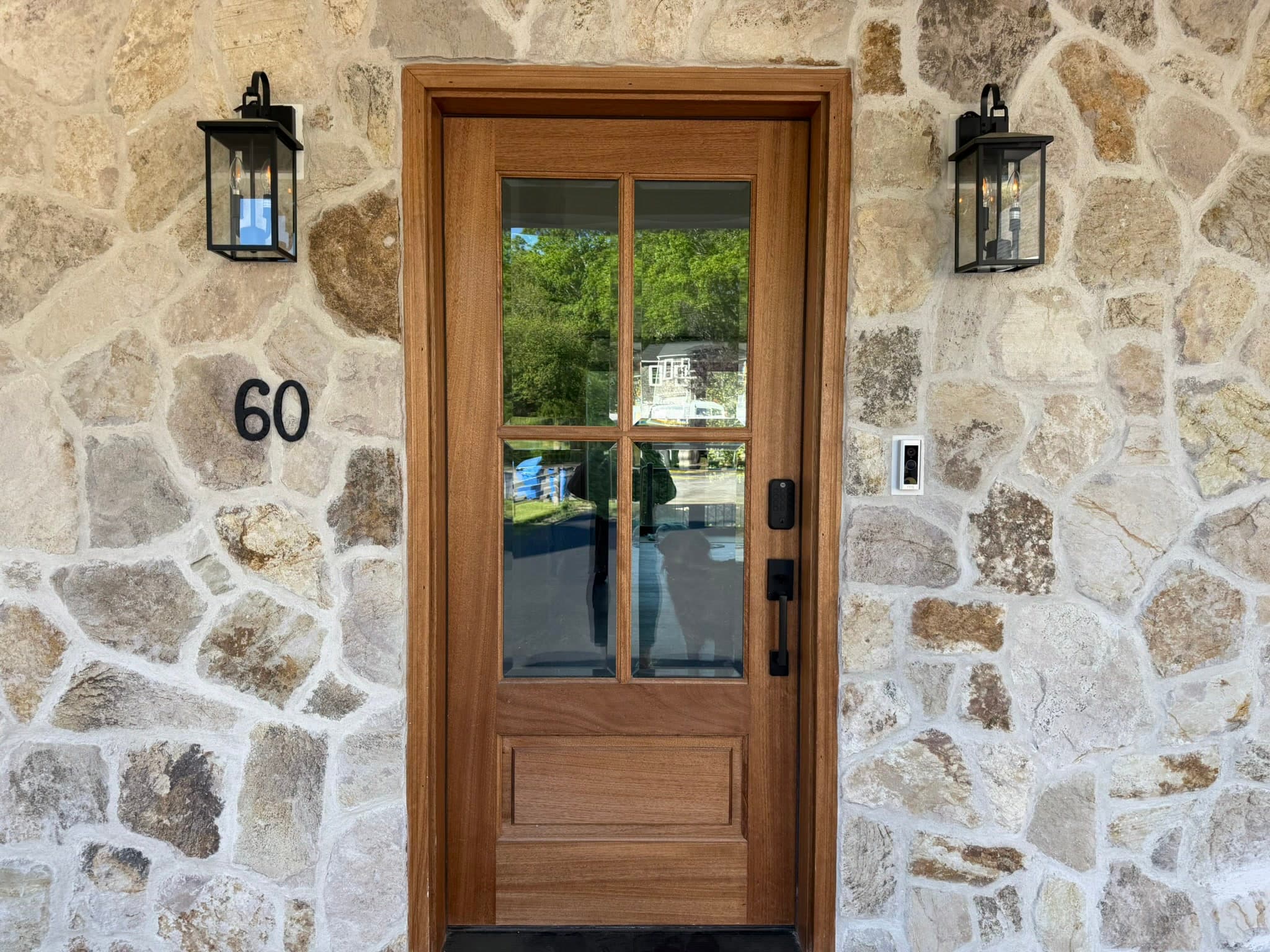
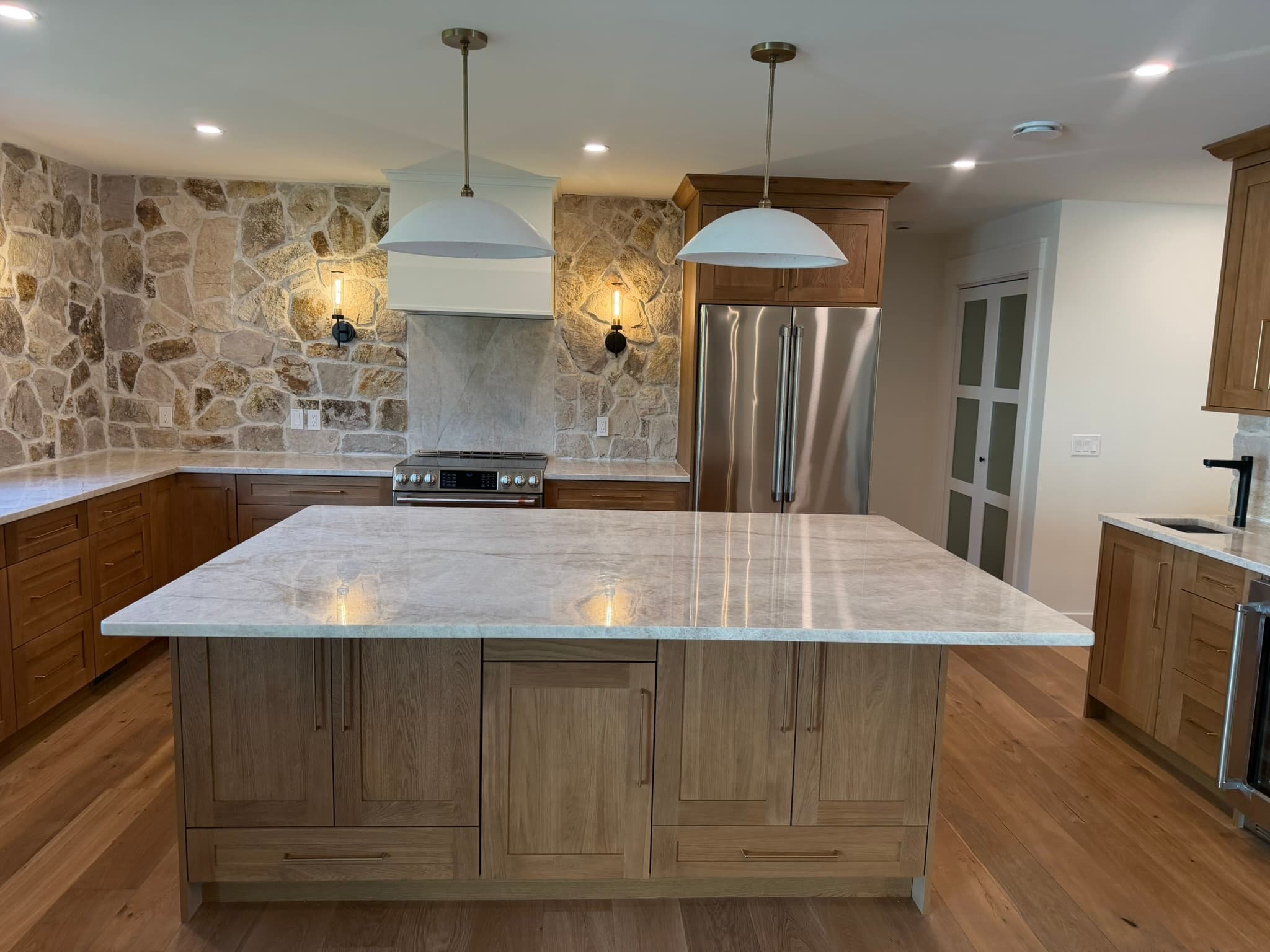
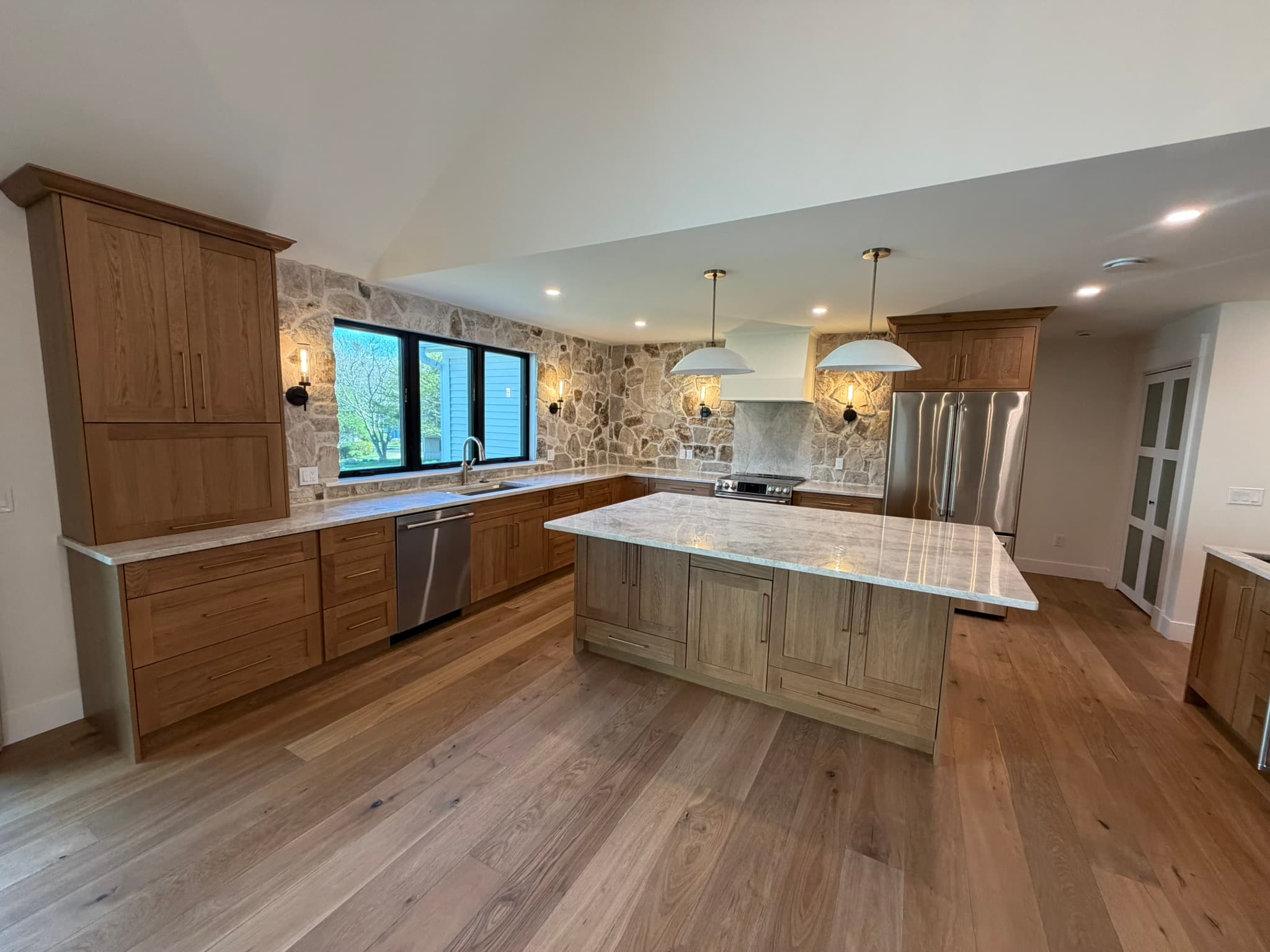
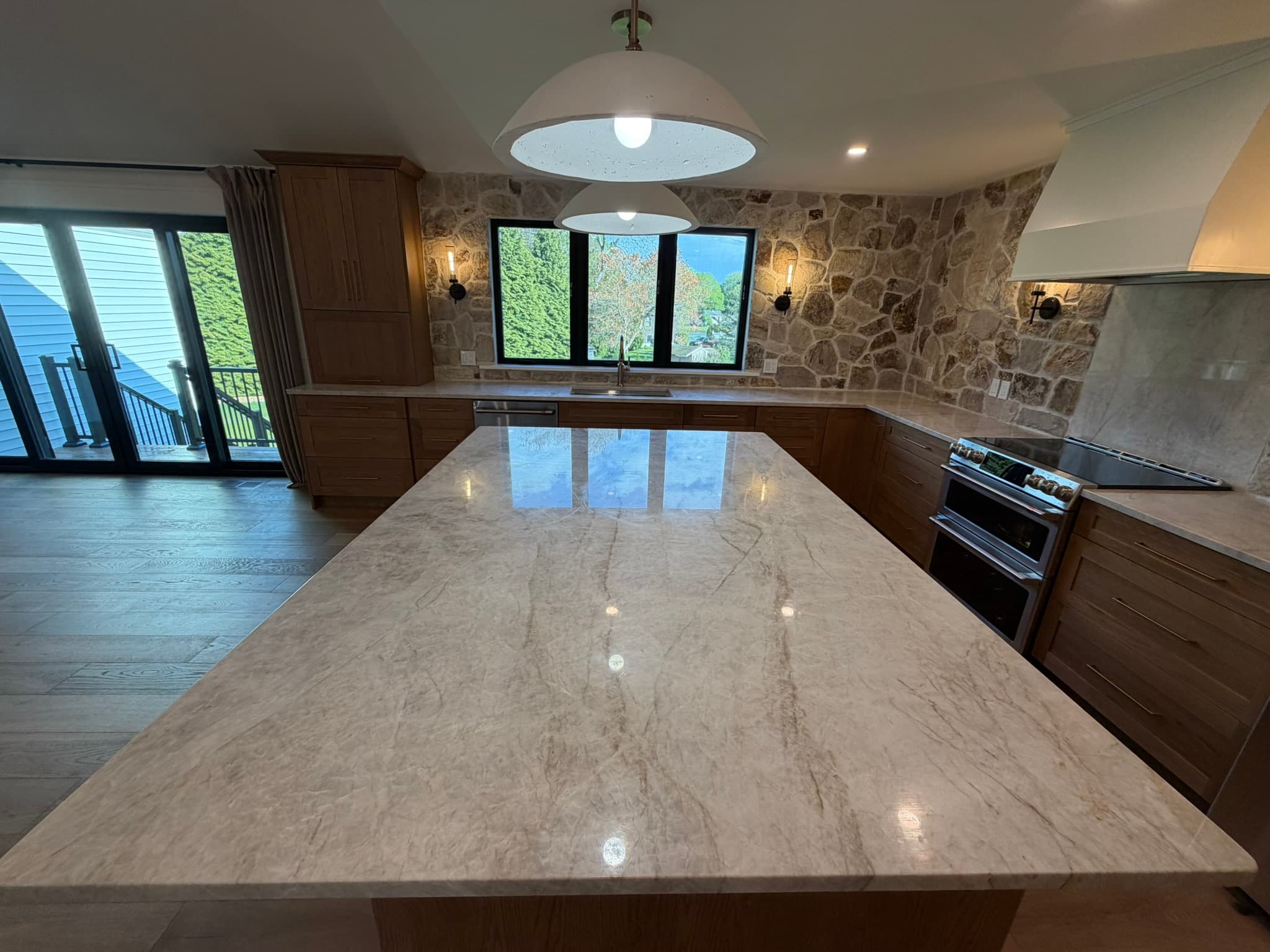
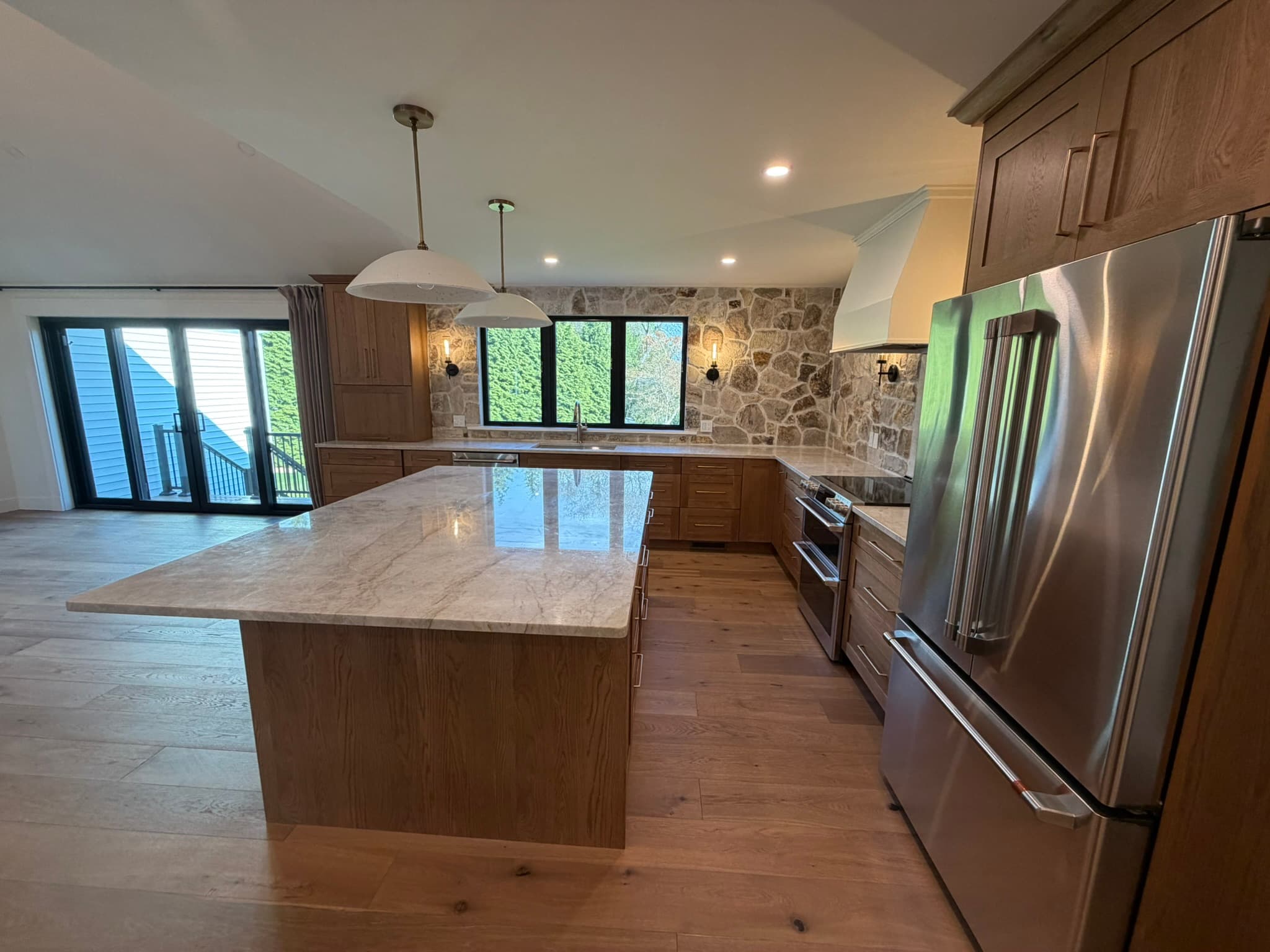
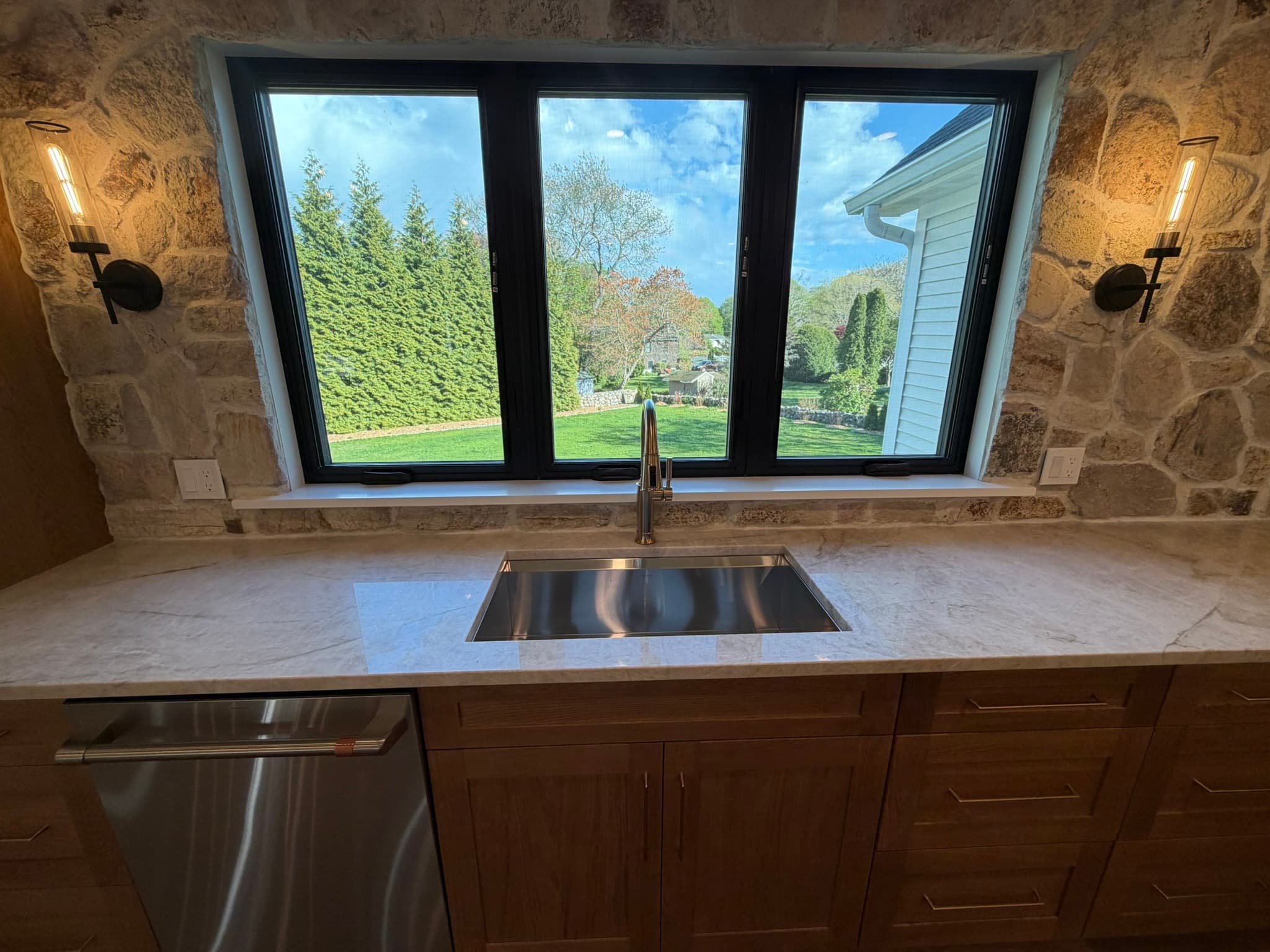
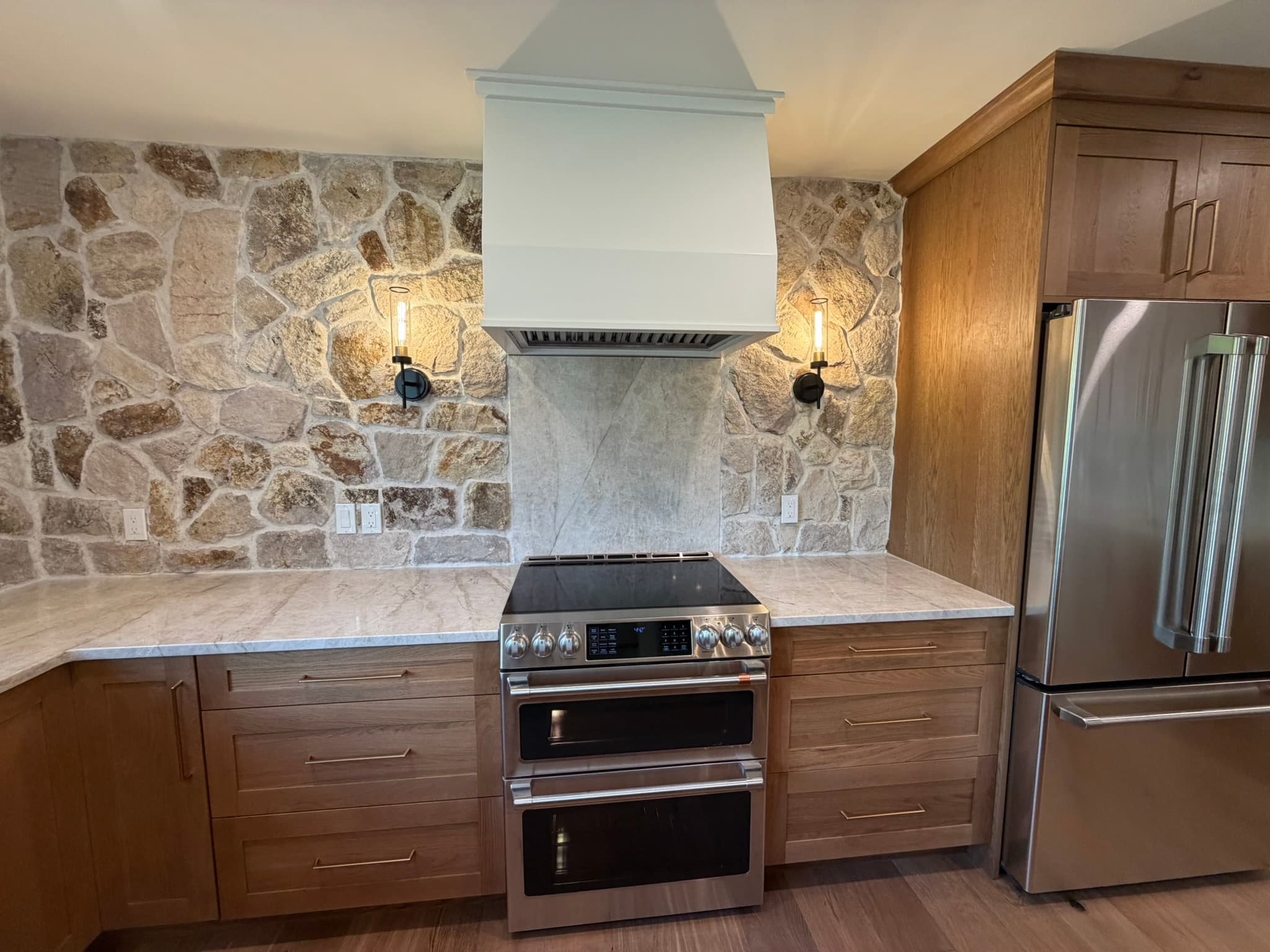
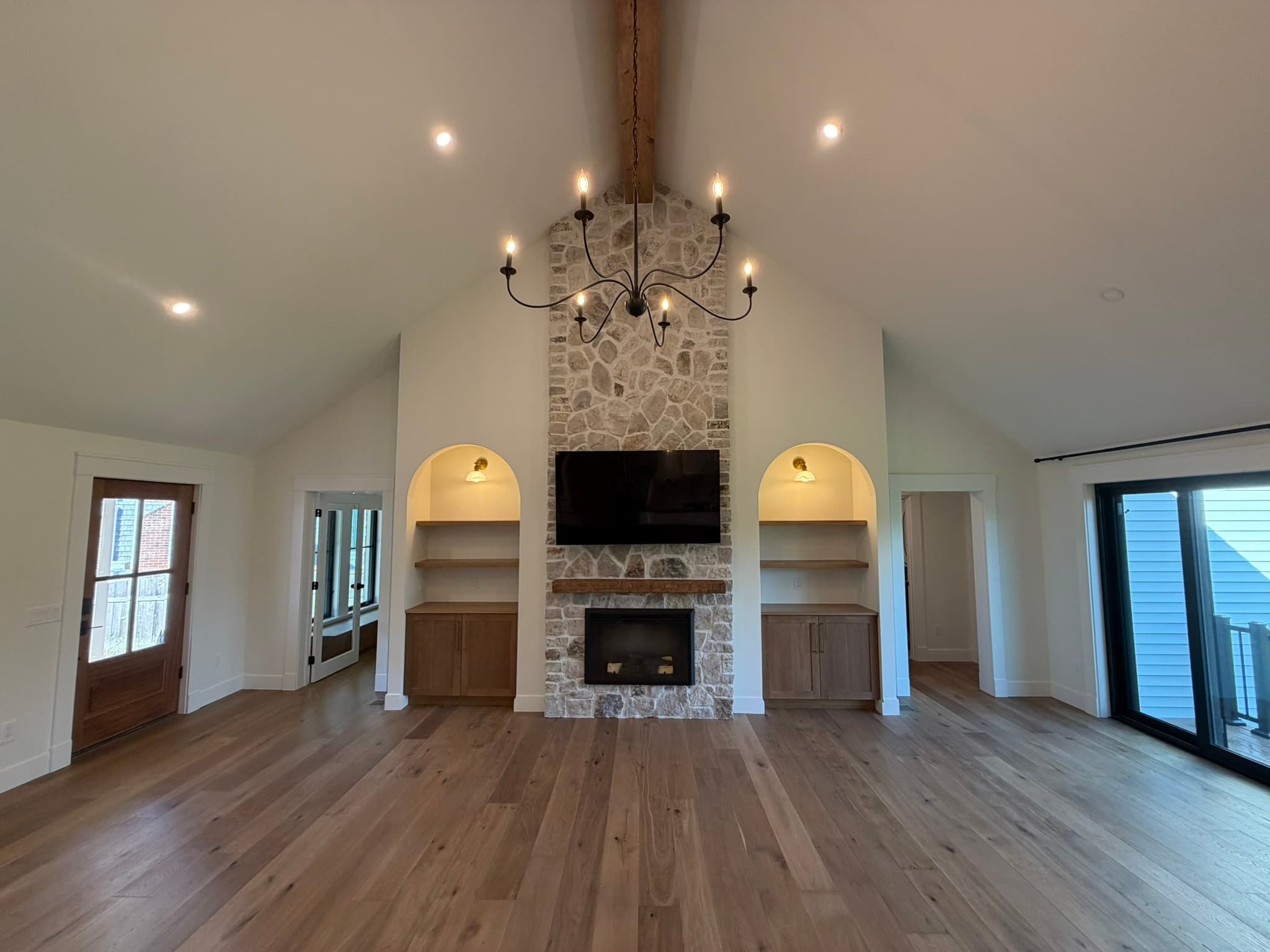
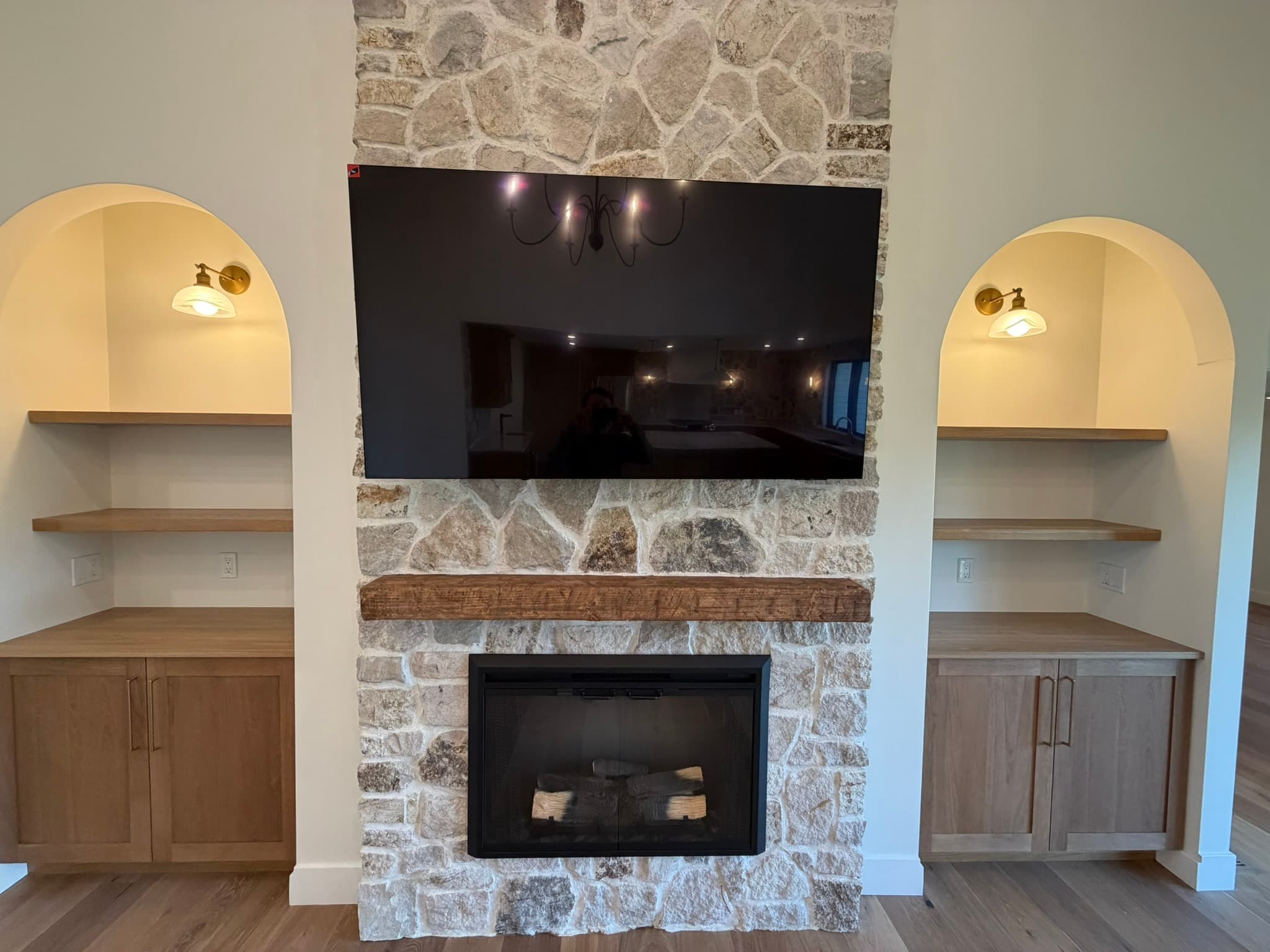
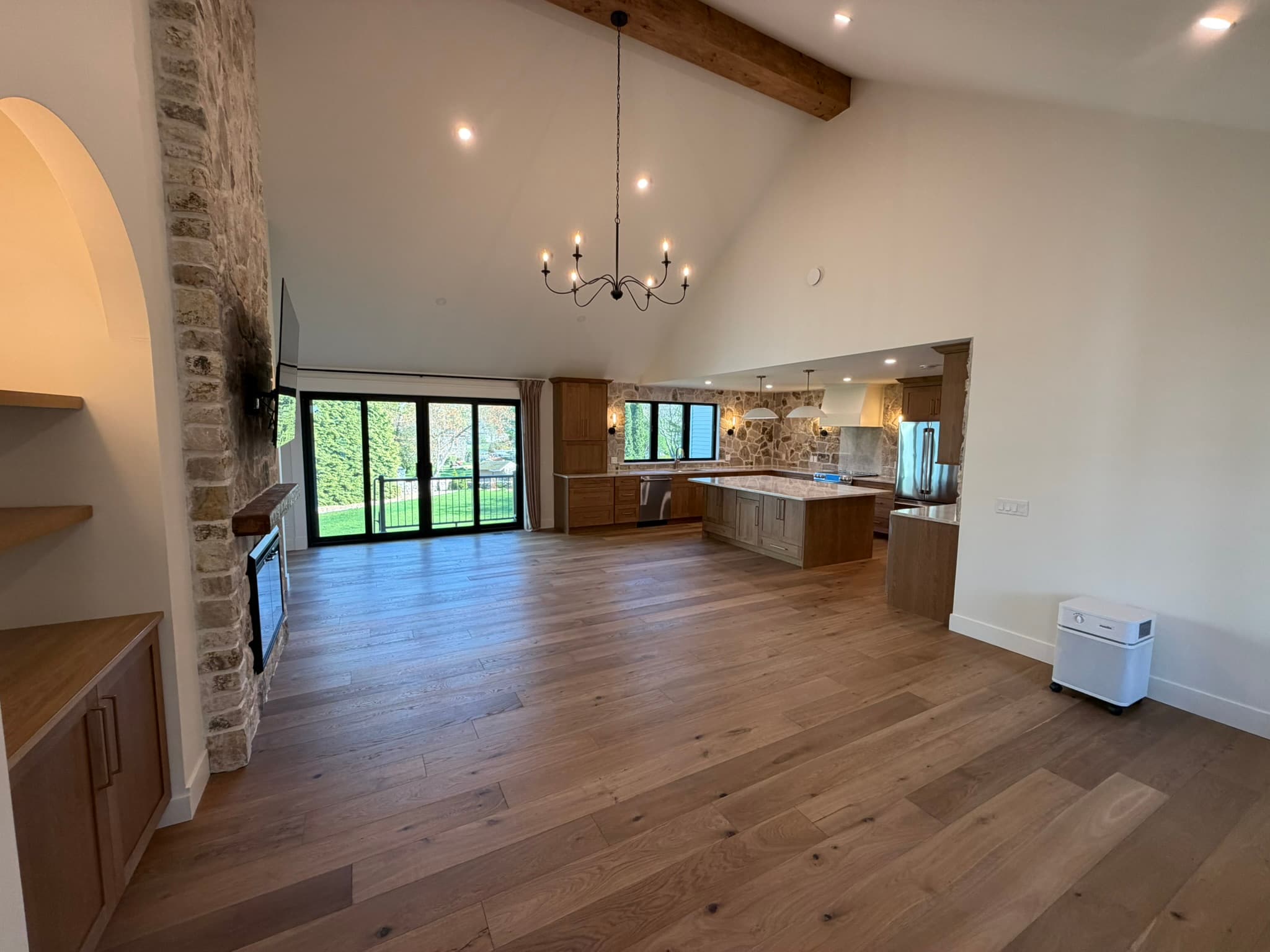
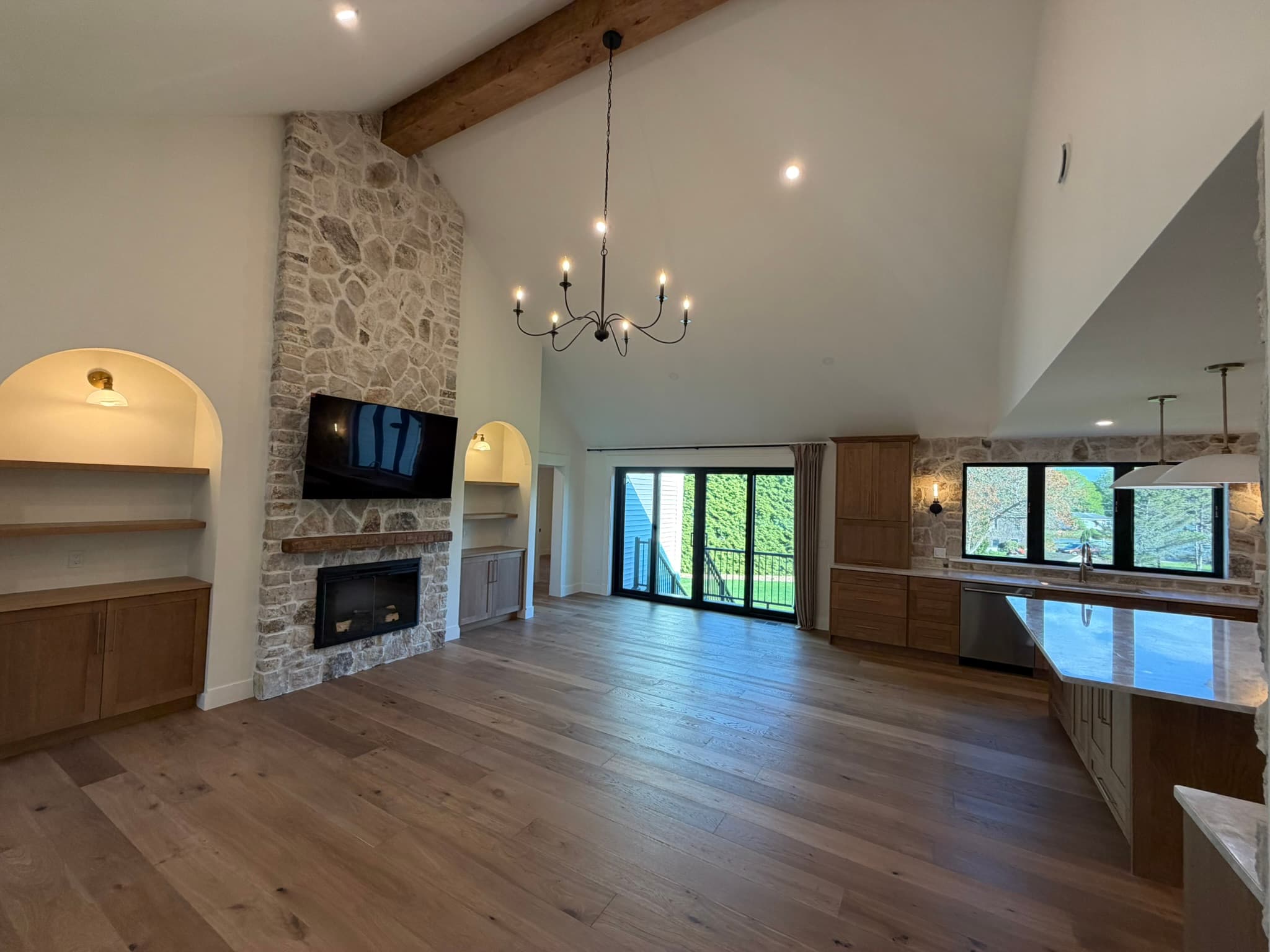
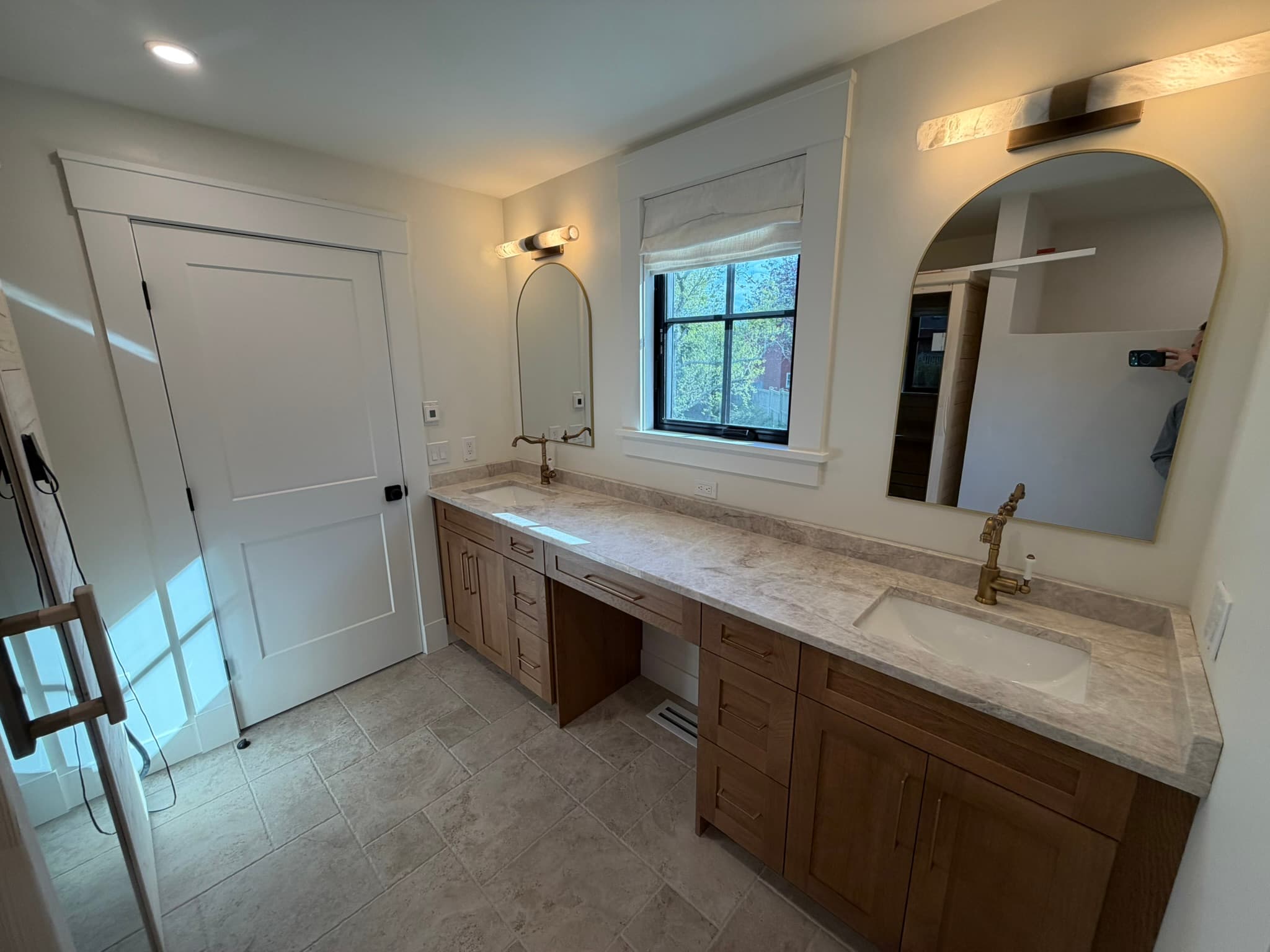
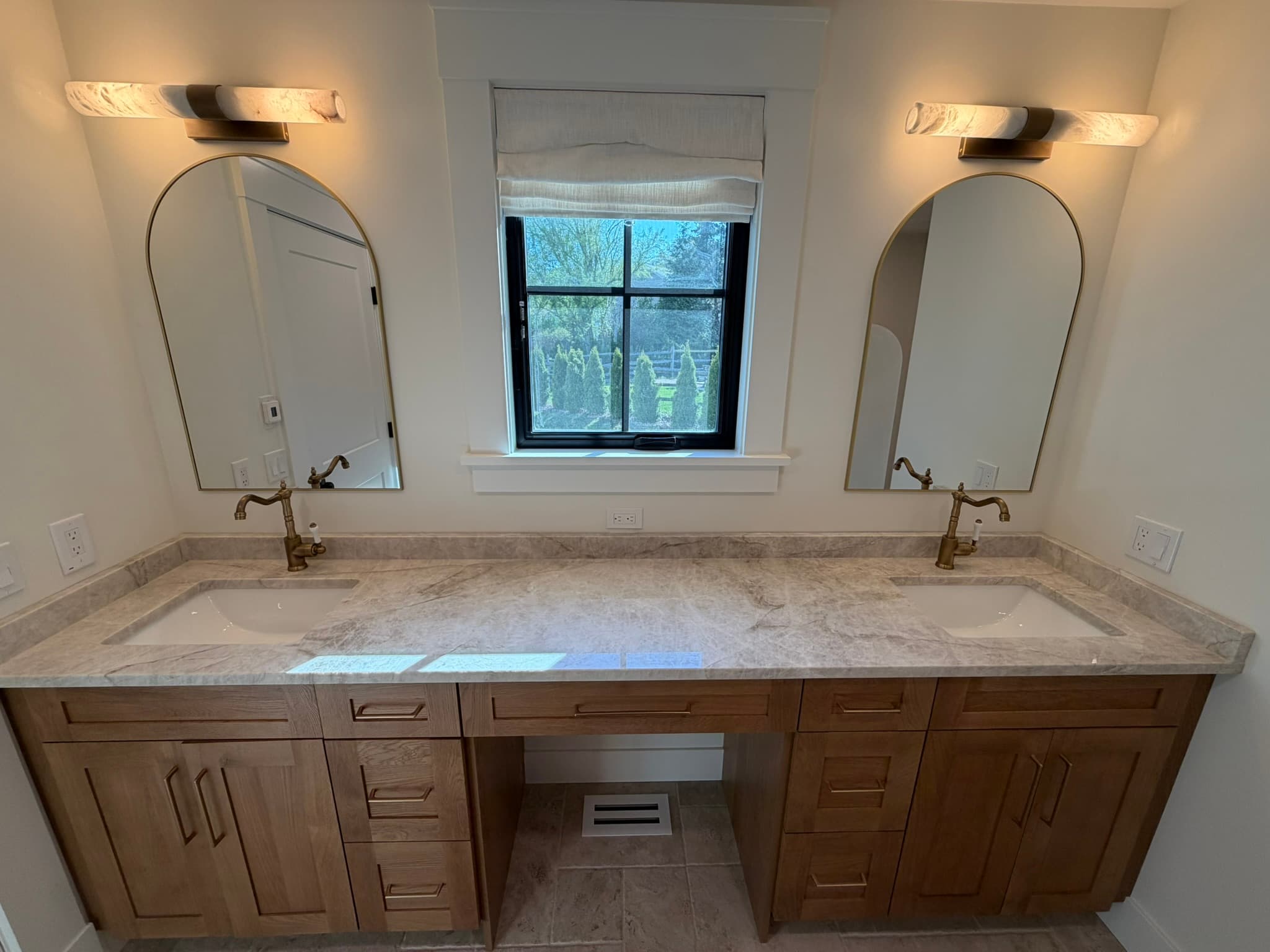
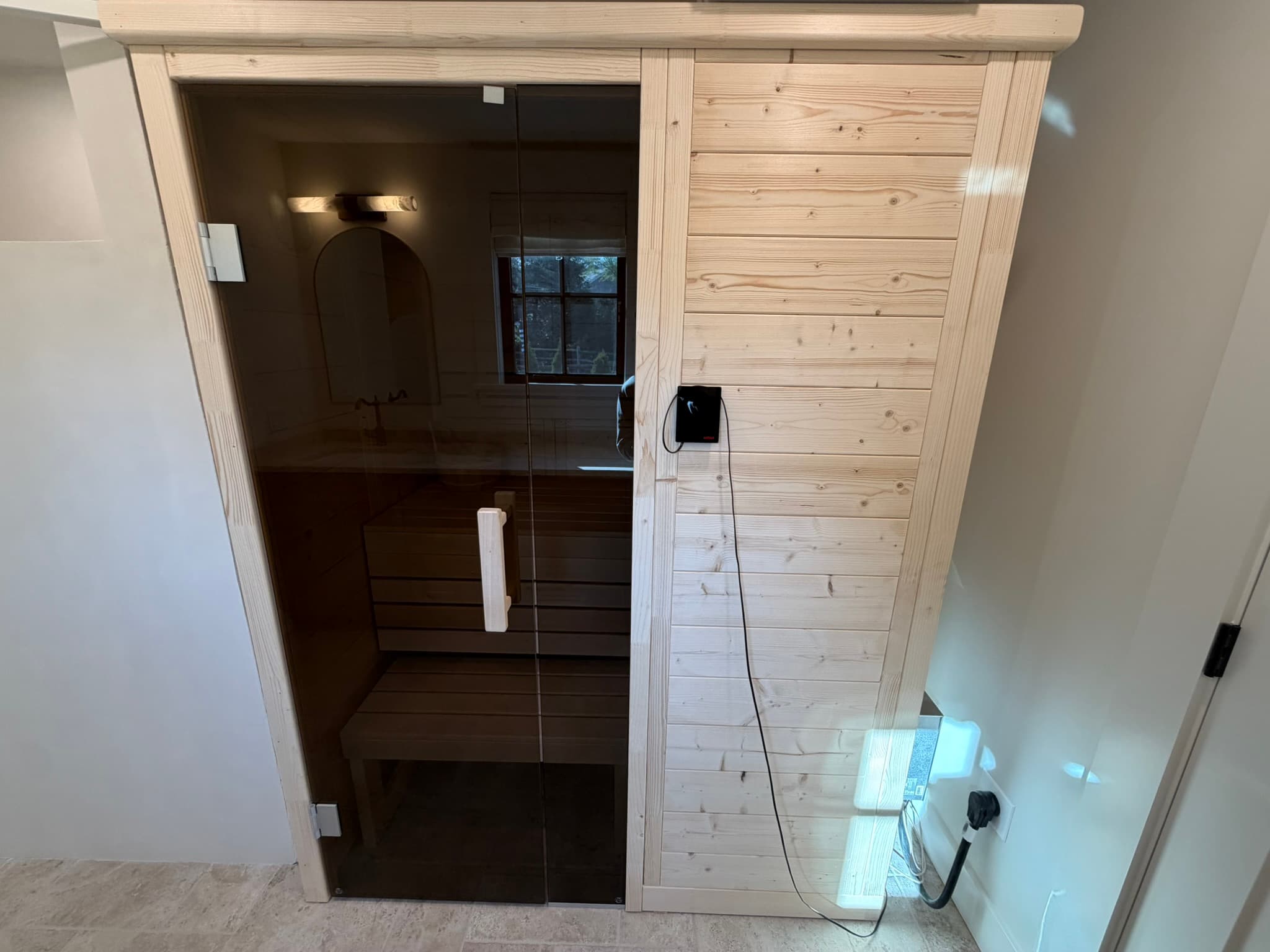
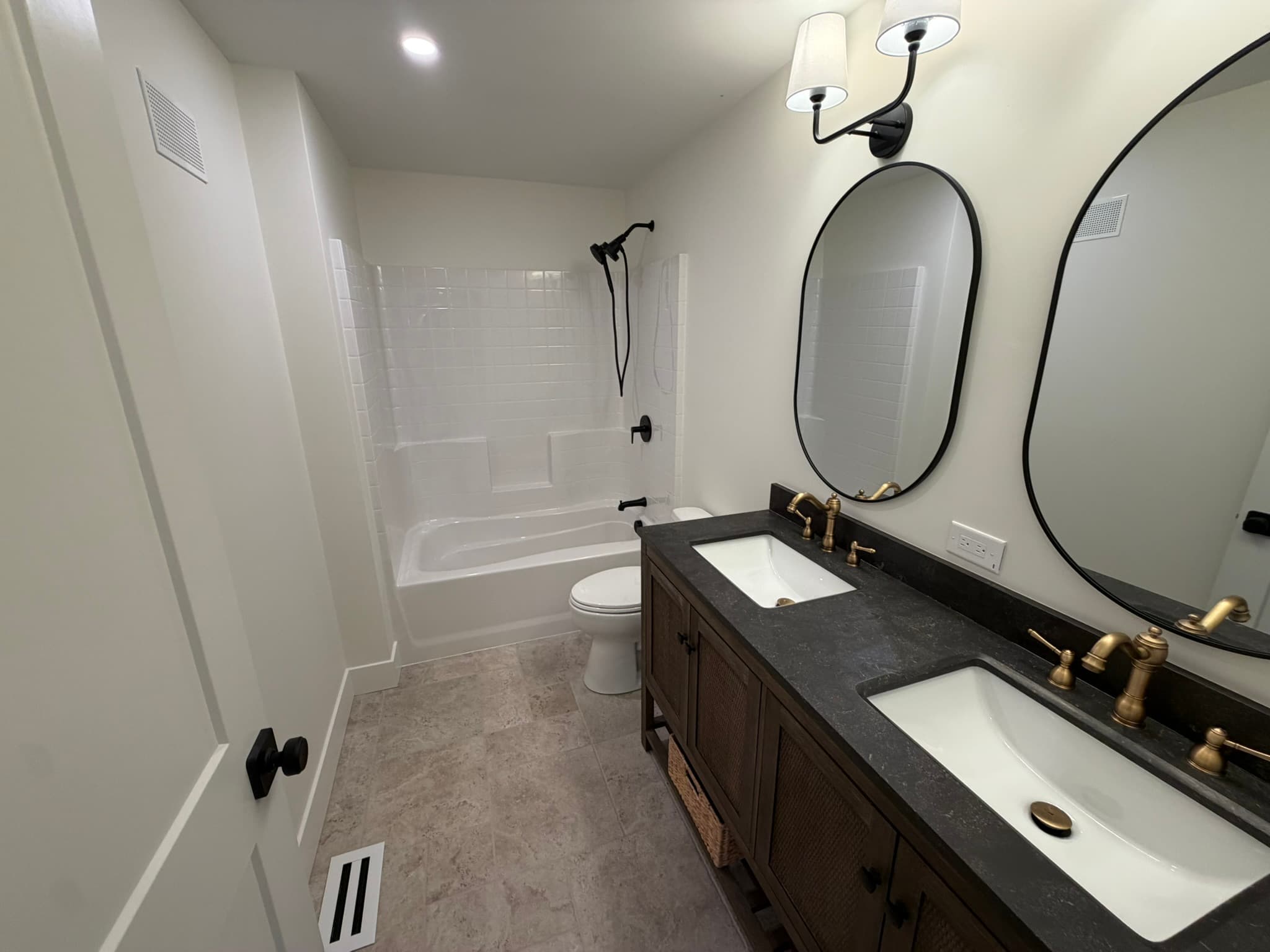
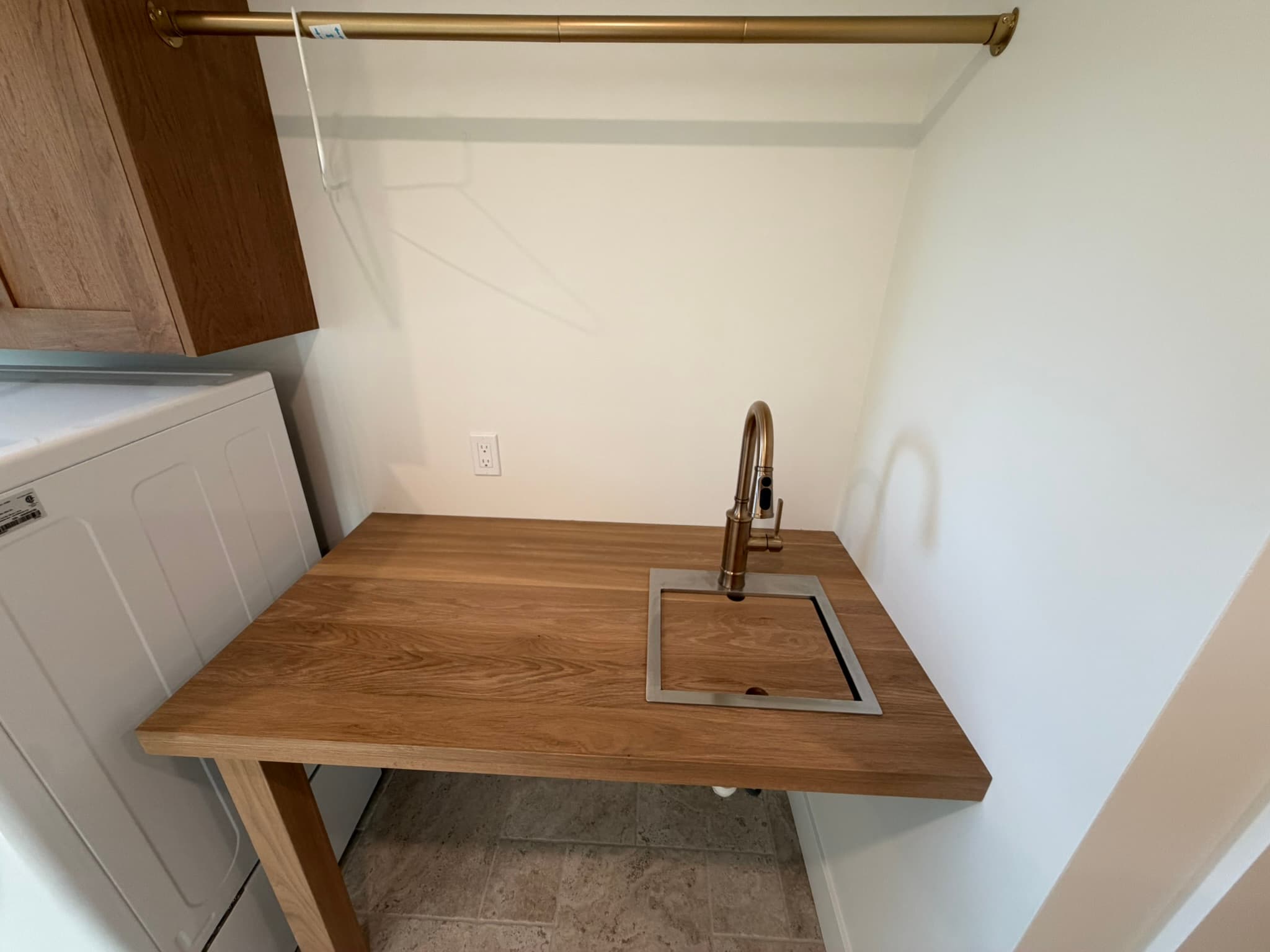
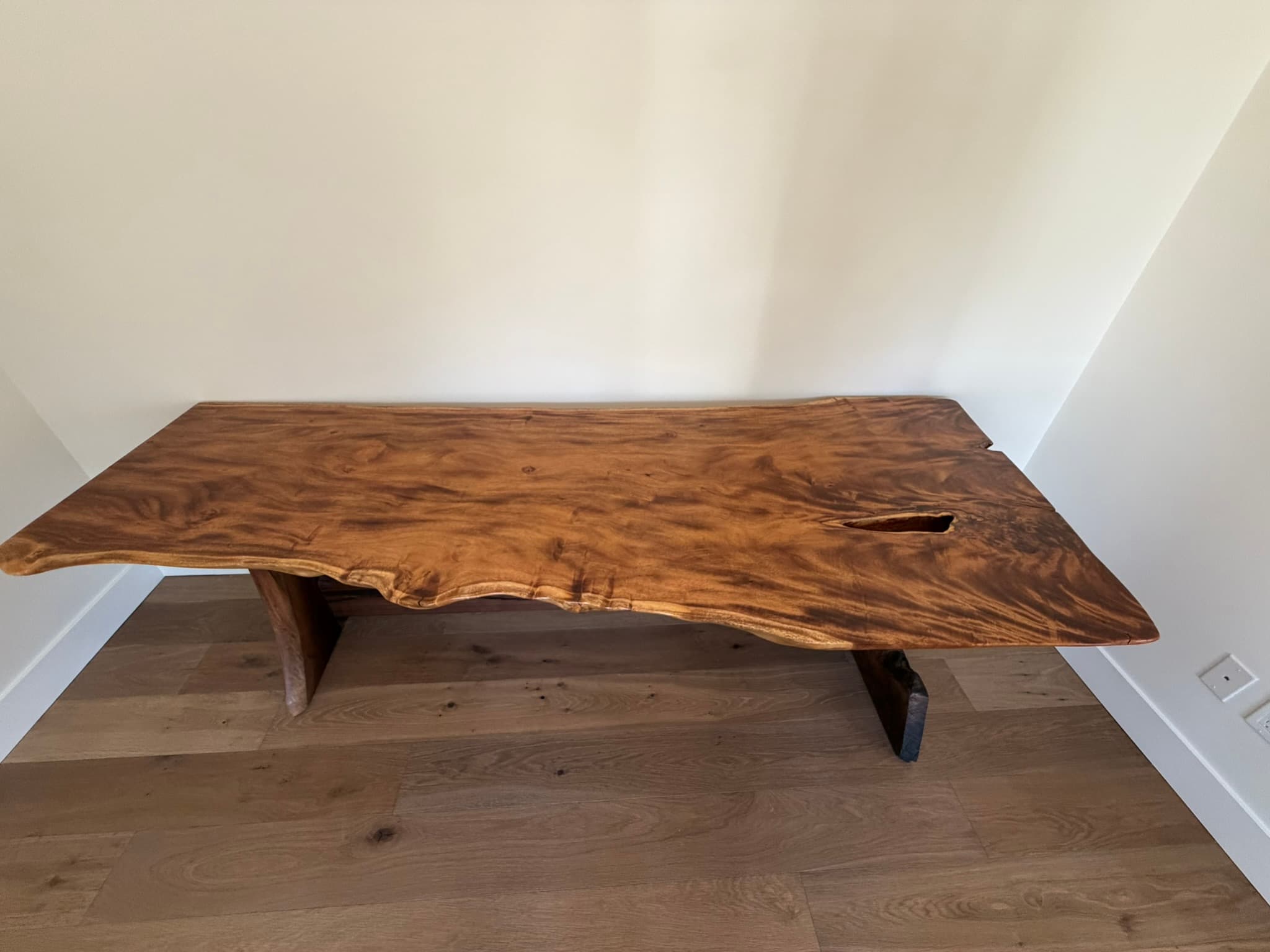
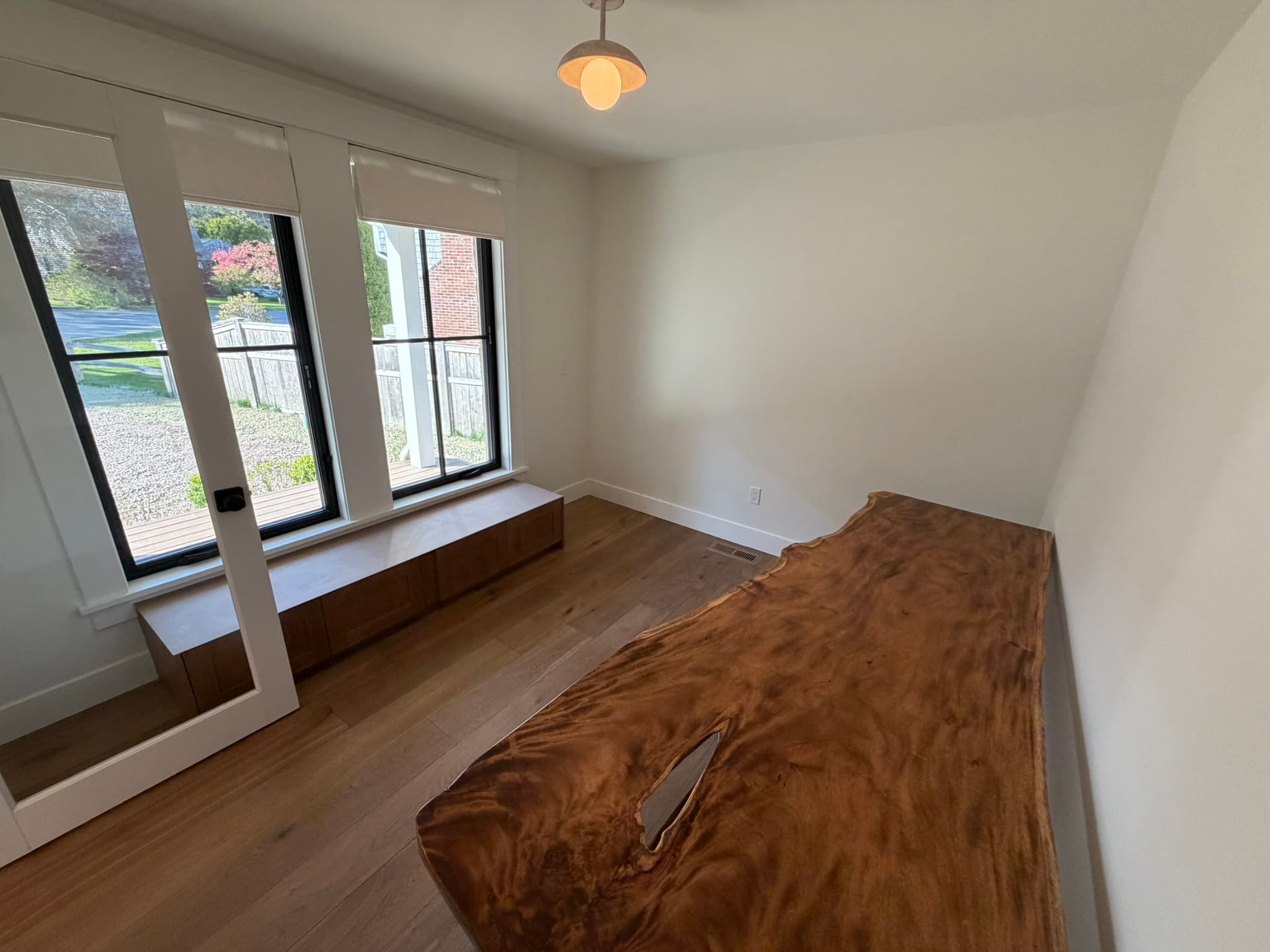
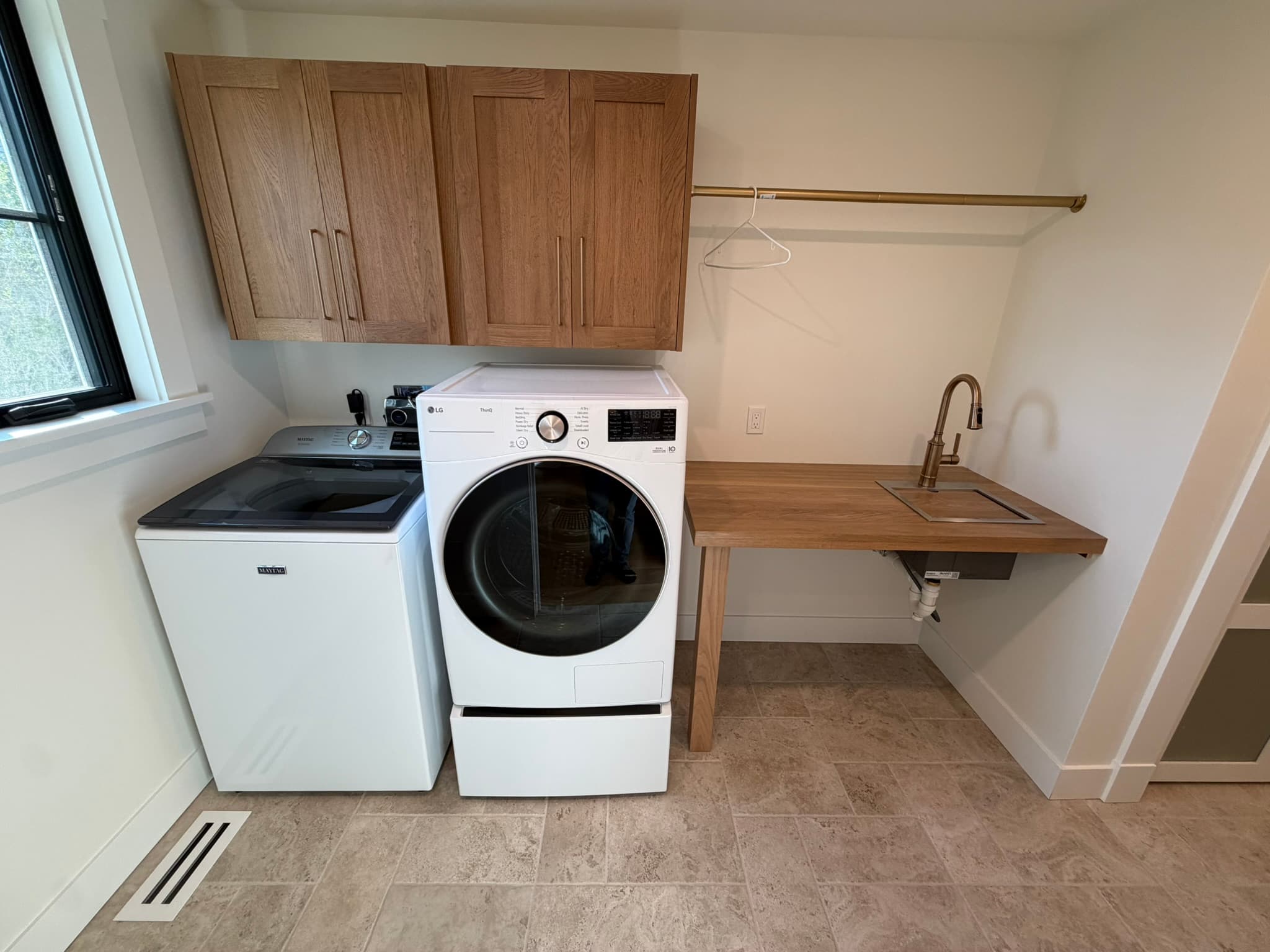
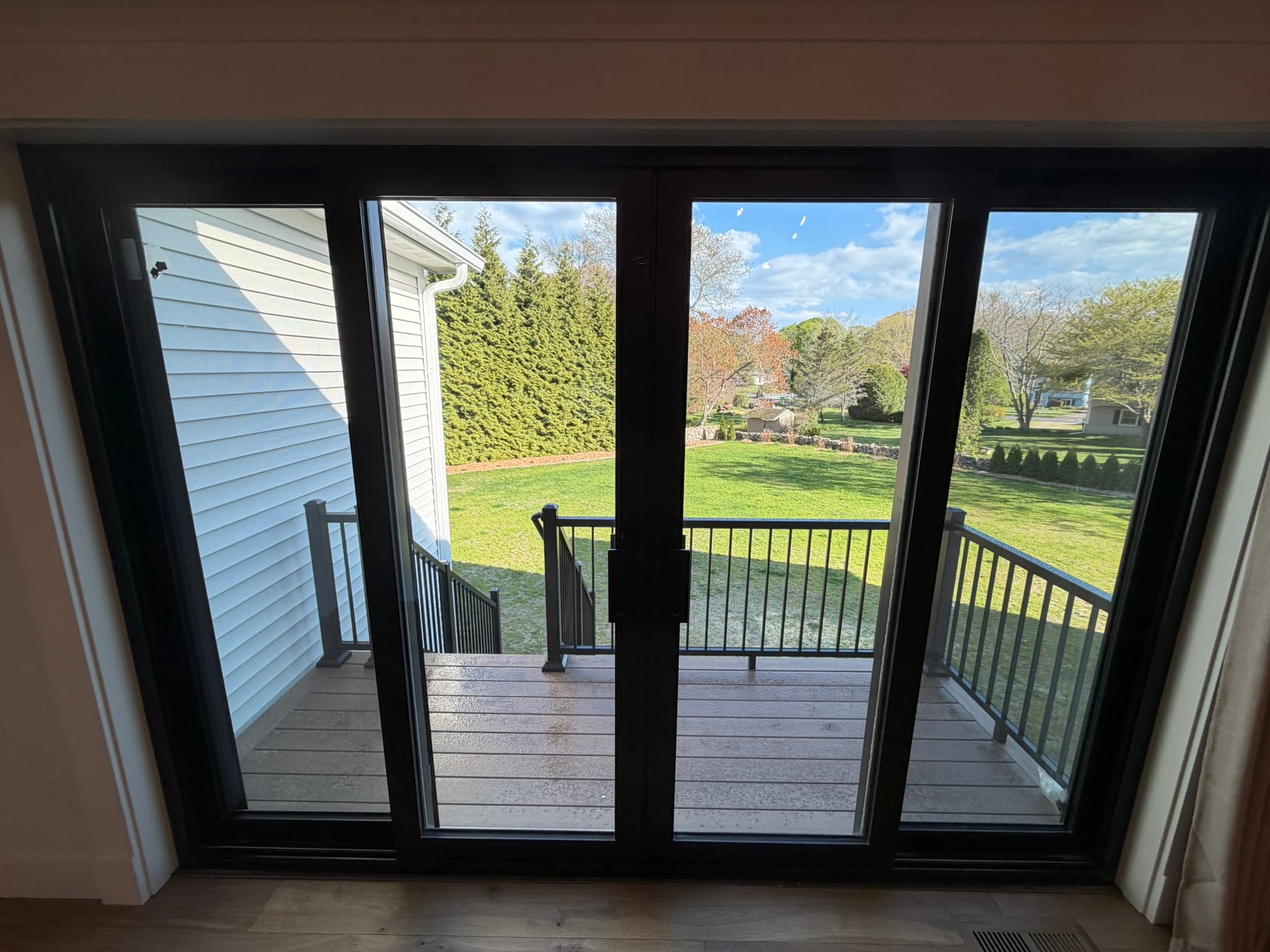
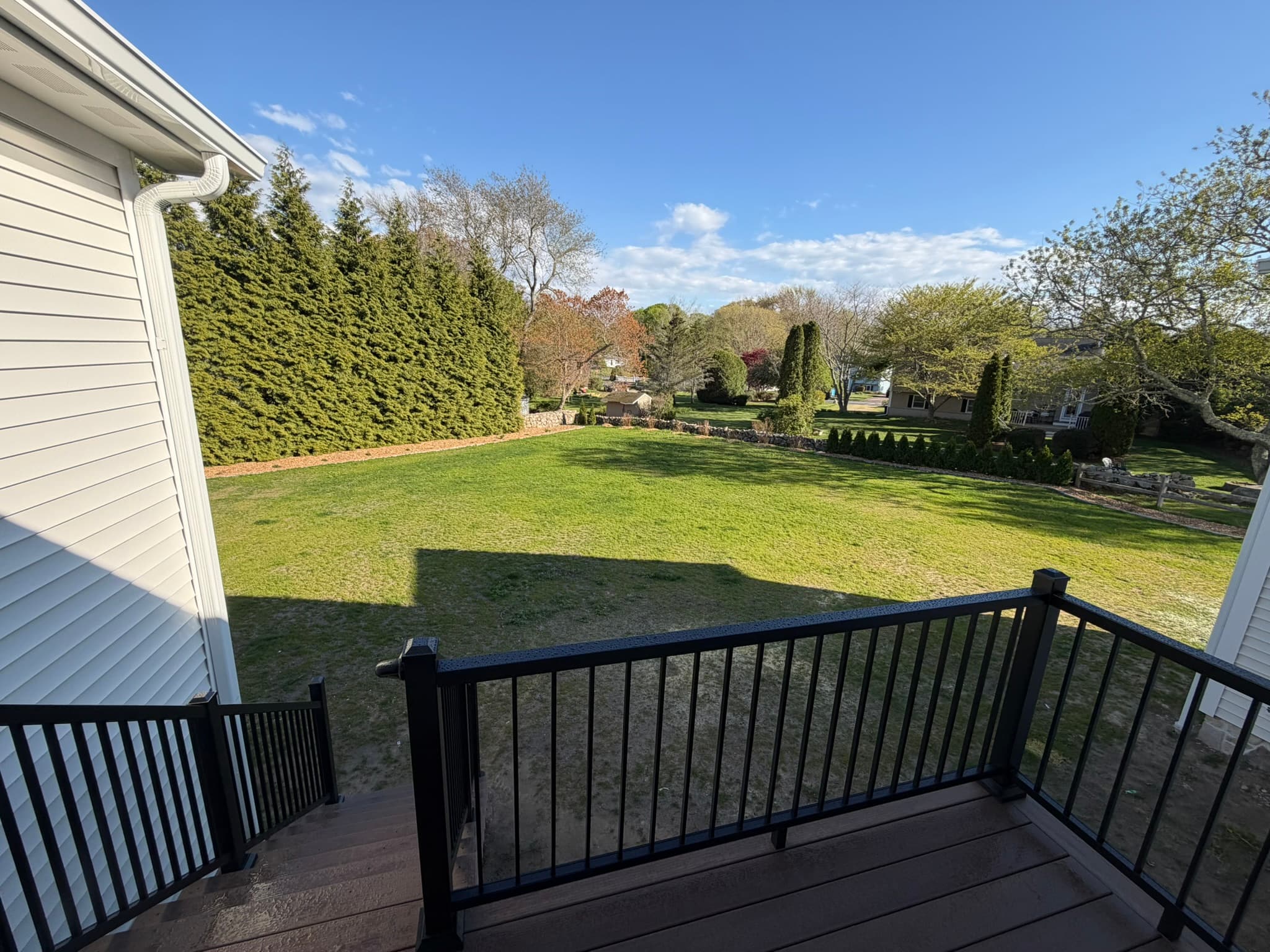
The home is complete and occupied. The photographs here are of the finished home.
What was built, system by system
Building shell
What was built
2×6 framed walls with continuous exterior insulation (R-27) on both the first floor and the basement, under R-45 flat and R-49 vaulted ceilings. Below-grade foundation walls carry a framed perimeter knee wall — R-5 continuous foam plus R-13 unfaced batt, code-compliant for Zone 5A foundation walls. R-10 rigid foam runs below the slab and at its perimeter, forming a thermal break, over a 10-mil vapor barrier. Triple-pane-class Alpen windows (U-0.16–0.19) and insulated fiberglass doors (U-0.22). The completed envelope tested at 1.37 air changes per hour, against a program limit of 3.0.
Result
Consistent indoor temperatures from room to room, low heating and cooling loads, and reduced sound transmission from outside.
Heating & cooling
What was built
One Mitsubishi 2.5-ton cold-climate inverter heat pump (ENERGY STAR Cold Climate / Most Efficient), with all ductwork and the air handler inside the conditioned envelope, so no conditioned air is lost to unheated space. It is sized to the home's calculated loads: about 30,025 Btuh of heating at 7°F outdoors and 18,584 Btuh of cooling at 87°F.
Result
A single heat pump holds the whole house at a stable temperature and humidity across the full range of Rhode Island conditions. Because it is sized to the calculated loads rather than oversized, it modulates at low output instead of short-cycling.
Ventilation
What was built
A Zehnder ComfoAir energy-recovery ventilator (ERV) runs continuously, ducted room by room. Dedicated supply registers deliver filtered (MERV-8) outdoor air to the bedrooms and main living areas, while separate extract registers pull stale, humid air from the rooms that generate it — bathrooms, the kitchen, and utility spaces. The two airstreams never mix; they pass on either side of a heat-exchange core that transfers about 85% of the heat and roughly 70% of the moisture from the outgoing air to the incoming air, so the fresh air arrives already close to indoor temperature.
Result
Every living space receives a steady supply of fresh, filtered air, while odors and humidity are exhausted at their source. The heat-exchange core recovers most of the energy from the outgoing air, so ventilation runs continuously without a heating or cooling penalty.
Water, appliances & lighting
What was built
A Rheem 50-gallon heat-pump water heater, a Café induction range, an ENERGY STAR Café refrigerator and dishwasher, an LG heat-pump dryer, 100% LED lighting, and WaterSense-labeled Kohler fixtures (nine in total).
Result
Hot water, cooking, laundry, and lighting all run on electricity at high efficiency. There is no gas line and no combustion anywhere in the home.
Solar, storage & EV
What was built
A 20 kW rooftop solar array (46 panels) generates the home's electricity, two Tesla Powerwall 3 batteries store that energy for use after dark or during an outage, and two electric-vehicle chargers are installed in the garage on dedicated 240-volt circuits.
Result
The home generates its own electricity, stores it, and can run on stored power after dark or during a grid outage. The same system charges the household's two electric vehicles at home.
Measured Performance: HERS −5, 1.37 ACH50, 25,000 kWh Solar
The figures below are measured on site or independently rated. Where a value is still an estimate, it is labeled.
Airtightness: 1.37 ACH50 (air changes per hour at test pressure)
A blower-door test measures how much air leaks through the building envelope under pressure. The DOE program allows up to 3.0 ACH50; this home tested at 1.37, under half the allowed rate. The test was performed by the independent rater.
Solar generation: about 25,000 kWh a year (design estimate)
The 20 kW rooftop array (46 panels) is designed to generate roughly 25,000 kilowatt-hours of electricity a year, and two Tesla Powerwall 3 batteries store it. That output is sized to cover the home's own use plus charging for two electric vehicles — an estimated annual use of about 19,000–21,000 kWh — which is the basis of the net-zero design.
Energy rating (HERS Index): −5 (Confirmed)
The home earned a HERS Index of (−5), a Confirmed rating verified on the finished home rather than projected. It was scored by the independent rating company CLEAResult and registered on the national RESNET registry (Registry ID 623125870, rated April 2026). For reference, the 2006 energy code the index is measured against rates about 100; the Rhode Island code this home was permitted under (2018) rates about 61; and a true net-zero home rates 0. A score below zero means the home is rated to produce more energy over a year than it uses — and the homeowners' utility account, currently carrying a credit balance, bears that out in practice.
Where −5 sits on the HERS scale
Lower is better — like a golf score. 100 is a home built to the 2006 energy code the HERS Index is measured against; 61 is the 2018 Rhode Island code this home was permitted under; 0 is net zero. At −5, the home is verified to make more energy than it uses. (Marker spacing shown evenly for clarity.)
What the certifications mean
- DOE Zero Energy Ready Home — Certifies the house itself to DOE's highest-efficiency new-home tier — built so efficient that rooftop solar can offset essentially all of its annual energy use. The certification doesn't count the solar; the installed 20 kW array and the Confirmed HERS −5 are what take this home past zero.
- ENERGY STAR — Verified to a national high-efficiency new-home standard, well above code.
- EPA Indoor airPLUS — Verified for healthier indoor air: low-emission materials, low-odor paint, and continuous filtered ventilation.
- WaterSense-labeled fixtures — Water-efficient WaterSense-labeled plumbing fixtures throughout, satisfying the ZERH program's water-efficiency requirement.
Every figure above is independently tested or rated. Full DOE and HERS documentation, including the Confirmed HERS Index certificate, is available on request.
If this is the kind of home you're considering, start a conversation →
NJ&J Builders participates in the DOE Zero Energy Ready Home (ZERH) partner program. View our DOE partner listing.
NJ&J Builders is an ENERGY STAR partner. Learn more at energystar.gov.

NJ&J Builders is a WaterSense partner and installs WaterSense-labeled fixtures. Learn more at epa.gov/watersense.
How the home works with the grid
The home stays connected to the grid and works with it in two ways.
Net metering — surplus is credited
The rooftop solar generates more electricity over a year than the home and its two electric vehicles use. The surplus is exported to the grid and credited by Rhode Island Energy under net metering, so over a full year the home produces at least as much as it consumes and its net electricity cost is close to zero.
ConnectedSolutions — the batteries help the grid at peak, and the homeowner is paid
The two Tesla Powerwall 3 batteries are enrolled in Rhode Island Energy's ConnectedSolutions program. When demand on the regional grid peaks, the utility draws on the home's stored energy to help meet it, and the homeowner is paid for that participation — while the system keeps a reserve for the home's own backup. The house is not only self-sufficient; it is a small, dispatchable resource for the grid.
Net metering and ConnectedSolutions are utility and state programs administered by Rhode Island Energy. Their terms, credit values, and availability are set by the utility and state regulators and change over time; the credit and payment a home receives depend on the programs in effect.
What the homeowners report
“What makes this home even more special is that it was built as a net zero home — something that required an incredible amount of knowledge, precision, and attention to detail. Every part of the process was handled with so much care and pride, making sure not only that the home was efficient and innovative, but also that it still felt warm, timeless, and exactly like ‘us.’”
The homeowners also report that the home is quiet and comfortable, with consistent temperatures and humidity throughout — and that their Rhode Island Energy account currently carries a credit balance: the home has produced more electricity than it has used.
That experience is backed by independent testing: the airtightness was measured by a third-party rater and the ventilation system was field-commissioned and measured on site.
About the builder
60 Rockland Drive was a collaboration of two firms under principal Kenneth Hayes, a licensed Rhode Island general contractor (#17761). South County Design Group provided the structural design, energy modeling, and equipment selection. NJ&J Builders, a U.S. Department of Energy Zero Energy Ready Home partner, was the general contractor for construction. The finished home's performance was verified by an independent third-party rater, CLEAResult.
- Design— the home is engineered to a defined performance target for your site and how you live.
- Permit— we handle the approvals.
- Build— we construct the airtight, all-electric, heavily insulated shell and install the systems.
- Verify— an independent third-party rater tests and certifies that the finished home performs as designed.
See how the design-build process works →
Every performance figure on this page is independently tested or rated — not self-reported.
Net Zero Home FAQs — questions you're probably asking
Does building net-zero cost more?+
A net-zero home costs more to build than conventional construction. Its operating cost is low by design: the home is all-electric, with no fuel deliveries or gas bill, and its rooftop solar is sized to offset essentially all of its energy use. The size of that trade-off depends on the design, and we'll go through it for your specific build.
What will the energy bills actually be?+
The independent rating bears out the design: a Confirmed HERS Index of −5, meaning the home is rated to produce slightly more energy over a year than it uses. The homeowners' Rhode Island Energy account currently carries a credit balance. Actual bills depend on utility rates and how a household lives, so we don't quote a fixed dollar figure — but the home is rated to run at or below a net-zero energy cost.
What does a HERS Index of −5 mean?+
A HERS Index of −5 means the home is rated to produce more energy over a year than it uses. The HERS Index measures a home's energy performance against a reference home built to the 2006 energy code, which scores 100; a typical new Rhode Island home built to the 2018 code scores about 61; and zero is net zero. 60 Rockland Drive in Wakefield, Rhode Island earned a Confirmed HERS Index of −5 — verified on the finished home by the independent rater CLEAResult and registered on the national RESNET registry (Registry ID 623125870).
What does “self-sustaining” actually mean here?+
It means the home is designed to produce about as much energy over a year as it uses, and to store it on site. The house is all-electric and highly efficient, so it needs little energy to begin with; the 20 kW rooftop solar array generates power to cover that use, and two Tesla Powerwall 3 batteries store it so the home can run on its own energy after dark, not only while the sun is up. There is no oil tank and no gas line.
Is the air really healthier than in a normal house?+
Yes. A balanced energy-recovery ventilator runs continuously, supplying filtered outdoor air to the living spaces around the clock and exhausting stale air. Combined with low-VOC paint, low-emission materials, and MERV-8 filtration, the home is certified to the EPA Indoor airPLUS standard.
Is it comfortable in a cold winter and a humid summer?+
Yes. The heating is sized to hold the house at 70°F on a 7°F night, and the cooling is sized to keep rooms cool and dry — around 50% relative humidity — on a hot, humid afternoon, with even temperatures from room to room.
What happens in a power outage?+
Two Tesla Powerwall 3 batteries store the energy the rooftop solar produces, so when the grid goes down the house runs on its own stored power and recharges from the sun the next day. How long the batteries carry the home depends on the load at the time. The airtight, heavily insulated shell also holds the indoor temperature far longer than standard construction during an outage.
Is the certification real, and who verifies it?+
Yes. The home was independently rated and verified by CLEAResult and is certified under the U.S. Department of Energy's Zero Energy Ready Home program, and it earned a Confirmed HERS Index of −5, registered on the national RESNET registry (Registry ID 623125870). The airtightness was physically tested and the energy rating independently calculated — the certification is third-party, not self-applied.
Can you build something like this for me?+
Yes. This is exactly the kind of custom, all-electric, self-sustaining net-zero home NJ&J designs and builds. Start a conversation and we'll talk through your goals and your site →
Full technical record (for engineers, raters, and reviewers)+
This section is the full technical record for engineers, raters, and reviewers. Acronyms appear here, each defined on first use.
Program & verification
U.S. DOE Zero Energy Ready Home (ZERH) V2 Rev 1, certified via the Energy Rating Index (ERI) compliance path. Rooftop PV is installed on site with two Tesla Powerwall 3 batteries for storage, which satisfies the program's Renewable Ready requirement. Independent rating and verification by CLEAResult (third-party HERS provider, REM/Rate, Providence). Also certified to ENERGY STAR Single-Family New Homes V3.2 and EPA Indoor airPLUS V1 Rev 04, with WaterSense-labeled fixtures throughout (ZERH water-efficiency option 5.2). Confirmed HERS Index: −5 (RESNET Registry ID 623125870, rated 2026-04-24).
Project
60 Rockland Drive, South Kingstown (Wakefield), RI. IECC climate zone 5A. Custom 4-bedroom, single above-grade story + walkout basement. 4,218 sq ft of conditioned area (per the HERS certificate). Permitted August 2024. Structural design, energy modeling, and equipment selection: South County Design Group. General contractor: NJ&J Builders LLC. Principal of both: Kenneth Hayes (licensed RI general contractor #17761). All-electric. Complete and occupied.
Design loads (ACCA Manual J, 8th Ed.)
Heating: 30,025 Btuh at 7°F outdoor / 70°F indoor. Whole-house cooling: 18,584 Btuh at 87°F / 75°F / 50% RH. Net envelope UA: ~32–36 Btuh/°F below the ZERH prescriptive reference home — the envelope's total heat-loss rate is below the program's reference design. (Btuh = heating/cooling demand; UA = heat lost per degree of temperature difference, lower is better.)
Envelope schedule
- Framed walls (first floor and basement): 2×6 framing + continuous exterior insulation. R-27 (rated assembly value).
- Below-grade foundation walls: framed perimeter knee wall, R-5 continuous foam + R-13 unfaced batt — code-compliant for Zone 5A foundation walls.
- Slab: R-10 rigid foam below the slab and at the perimeter (the perimeter forms a thermal break), over a 10-mil vapor barrier.
- Flat ceiling: R-45 (U-0.022–0.024). Vaulted ceiling (1,461 sq ft): R-49 (U-0.022).
- Windows: Alpen CW 625 Series + Narrow Line slider, U-0.16–0.19 (triple-pane class).
- Typical doors: Therma-Tru fiberglass, U-0.22.
- Measured airtightness: 1.37 ACH50 (whole-envelope blower-door test; ZERH limit is 3.0).
Heating & cooling equipment
Single Mitsubishi Electric SUZ-AK30NLHZ + SVZ-AP30NL, 2.5-ton inverter-driven cold-climate heat pump, rated 9.2 HSPF / 17.1 SEER (legacy metrics as listed; AHRI 215712240). ENERGY STAR Cold Climate / Most Efficient. All ducts and the air handler are inside the conditioned envelope, so measured duct leakage to the outside was just 0.01 CFM25 — effectively zero. All-electric.
Equipment sizing (ACCA Manual S)
Approach 4 PASS on every concurrent pathway; heating 113% (47°F) / 107% (5°F); cooling 141% (per ANSI/RESNET/ACCA Standard 310, §4.13); 159% whole-house cleared via the Cold Climate exemption. Plain translation: passing every sizing check means the heat pump is right-sized — neither oversized (which short-cycles and wastes energy) nor undersized (which can't keep up). ENERGY STAR SFNH V3.2 Item 4.15: PASS.
Ventilation
Zehnder ComfoAir Q-450 ERV (energy-recovery ventilator), 85% sensible / 70% latent recovery. Field-commissioned 4/18/2026. Operates continuously at medium speed: 103 CFM supply / 106 CFM exhaust, meeting ASHRAE 62.2-2010.
Water, appliances, lighting
- Domestic hot water: Rheem Performance Platinum XE50T10HS45U1, 50-gal heat pump water heater, UEF 3.88. AHRI 207094237.
- Cooking: Café CHS900P2MS1 induction range. Refrigerator: Café CWE23SP4MS2 (ENERGY STAR). Dishwasher: Café CDT888P4VW2 (ENERGY STAR). Dryer: LG DLHC4002W heat-pump (ENERGY STAR Most Efficient 2025).
- Lighting: 100% LED (Halo 4" canless downlights + Philips Ultra Definition A19/BA11, 2700K, dimmable).
- Plumbing: WaterSense-labeled fixtures (ZERH water-efficiency option 5.2) — Kohler Santa Rosa toilets + Kohler Purist faucets/showerheads (9 fixtures).
- Indoor air quality: EPA Indoor airPLUS V1 Rev 04 — low-emission composite wood (TSCA Title VI / CARB Phase 2), Benjamin Moore Natura low-VOC paint, balanced ERV, MERV-8 4" media filtration.
- EV charging: two EV chargers installed in the garage, on dedicated 240-volt circuits.
Solar generation & storage
- PV array: 20.01 kW DC — 46 × Qcells Q.TRON BLK M-G2+ 435 W modules (25-year manufacturer warranty).
- Inverter: SolarEdge, 11.4 kW AC nameplate (single phase; 25-year warranty).
- Battery storage: 2 × Tesla Powerwall 3 (solar-charged; backup during grid outages).
- Estimated annual generation: 25,366 kWh (Isaksen Solar design estimate, agreement dated 2025-07-24).
- Incentives: federal solar tax credit; RI Battery ConnectedSolutions.
Final rating: HERS Index −5 (Confirmed), scored by CLEAResult and registered on the RESNET National Registry (ID 623125870), rated April 2026. The home is complete and occupied.
Project Location
60 Rockland Drive is in Wakefield, part of South Kingstown — see how we build across the town, coastal and inland.
Plan your net-zero home
NJ&J Builders designs and constructs custom net-zero homes like this one — all-electric, comfortable, low-energy, and able to generate and store their own power — in Rhode Island.
If you're considering a net-zero home, tell us about your site and your goals, and Kenneth will follow up to discuss it. 60 Rockland Drive is a private residence and isn't open for tours, but we're glad to walk you through what building your own would involve.
Start the conversation→